
 United Parcel Service (UPS) registered a net loss in the fourth quarter of 2012 as it dealt with a weak global trade, a tepid holiday shopping season, and a huge after-tax charge for pension plans. For 2013, UPS has set a profit goal that is below industry forecasts.
UPS, the world’s biggest package delivery service, posted a net loss of US$1.75 billion in the last quarter of 2012 after taking a $3-billion after-tax charge for pension plans, down from a $725-million net profit year-over-year. Without the pension-related charge, UPS said that it would have earned $2.05 billion, a figure still lower than expected.
The company is looking to raise earnings by 6 percent to 12 percent in 2013, which is also lower than analysts’ prediction.
“2012 presented its challenges, most notably weak global trade,” said Scott Davis, group chairman and CEO.
During the year, UPS delivered more than four billion packages. For the quarter, it delivered 18.8 million pieces per day, an increase of 2.9 percent over the prior-year period. Overall consumer spending for holiday shopping fell slightly below expectations.
As online retailers continue to rely on UPS to serve their customers, daily package volume was up 3 percent, led by 7.7 percent growth in UPS next-day air shipments, while ground shipments improved 3 percent.
On an adjusted basis, operating profit increased $58 million or 4.4 percent, and operating margin expanded to 15.4 percent, despite challenges created by Hurricane Sandy. Revenue grew 3 percent and revenue per piece increased 1.7 percent, driven by base rate improvements in both ground and air products.
For 2013, Kurt Kuehn, UPS chief financial officer said they expect economic growth to be “below long-term trends.” He added, “Despite $350 million in headwinds from unfavorable foreign exchange comparisons and increased pension expense, UPS anticipates full year diluted earnings per share to increase 6 percent to 12 percent over 2012 adjusted results.”
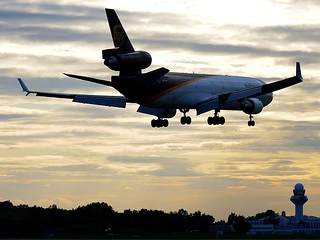
Photo: Kuba Bozanowski