

Along with improving container ports, the Philippine Ports Authority (PPA) should also develop bulk and break bulk terminals, according to a port executive.
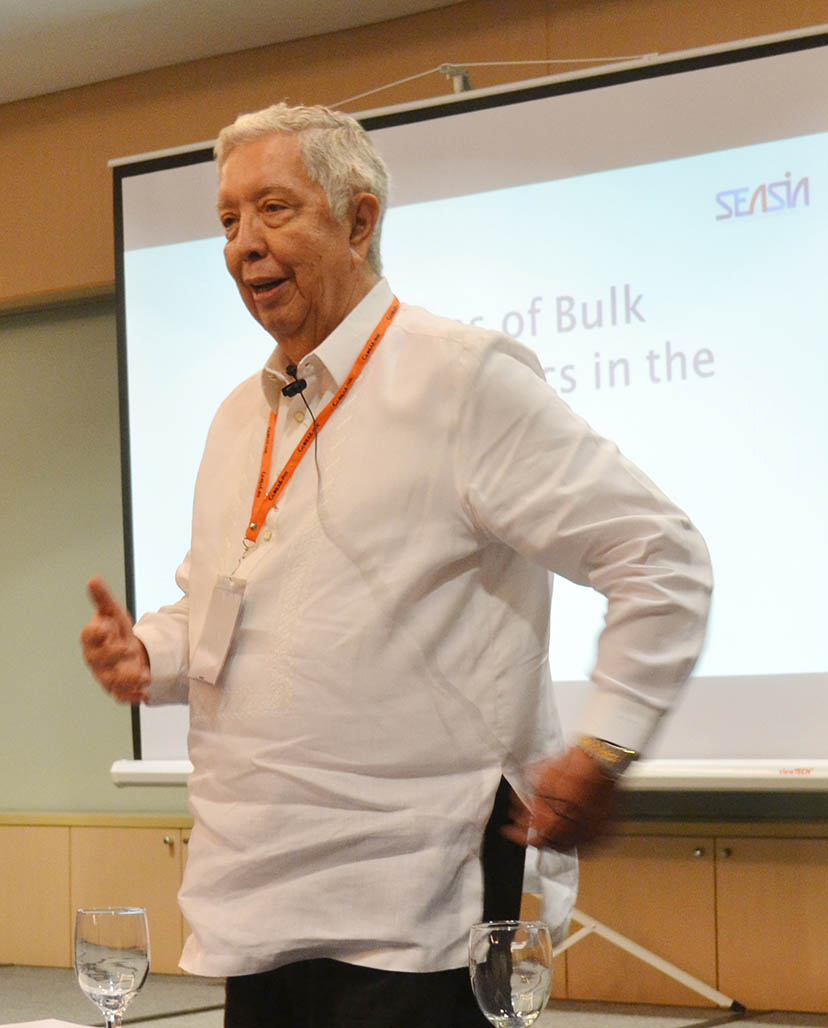
Ramon Atayde, chairman and chief executive officer of terminal operator Seasia Logistics Philippines, Inc., said PPA facilities are limited and equipment inappropriate when it comes to handling bulk and break bulk shipments.
In a recent presentation during the Port & Logistics Forum, Atayde said the capacity of PPA bulk and break bulk terminals does not match volumes, which have grown at pace with the country’s improving economy.
As most PPA ports are geared to handle containers and general cargo, he noted private ports are being pushed to undertake bulk and break bulk terminal operations based on need.
In order to develop the bulk and break bulk sector, Atayde suggested that PPA “strengthen” its berth and storage facilities and introduce environment-friendly equipment.
He observed that bulk and break bulk freight rates are high “principally because we cannot discharge quickly enough or we cannot load fast enough” due to improper equipment or shallow drafts at the ports.
To make costs more competitive, Atayde suggested establishing a cost-based tariff. He explained that whenever PPA hikes the tariff, it is always across the board, regardless of whether a service needs one or not, or whether one service merits a bigger increase over others.
Meanwhile to improve operations at bulk and break bulk terminals, the port executive recommended disallowing the discharge of bulk cargo at the apron of the pier, and instead asked PPA to invest in droppers and conveyors so cargoes could be transferred onto trucks. He discouraged the practice of directly loading bulk cargoes from the ship to the truck because of the risk of spillage. Potentially harmful cargoes such as fertilizers and coal can harm marine life if they spill into the ocean.
Atayde likewise warned against discharging at anchorage to avoid clogging up the berth.
And to support free competition, the port operator recommended lifting the prohibition on constructing a private commercial port within 50 kilometers of a government port.
“If the government port cannot satisfy your needs, why won’t you allow a port beside it (to do so)?” he said.
Strengthening road networks is also a concern, as inadequate transport modes to the port can result in congestion and cargoes getting stuck inside the terminal. He pointed out that terminals are designed as transit facilities, not storage areas.
Atayde said that while it is expensive to build ports, they are just as important as roads, and he hopes banks become more receptive to port development proposals.
Lastly, continuous dialogue between stakeholders, terminal operators, and the government can go a long way to further invigorating the industry, he said.
Asked what areas PPA should prioritize when it comes to bulk and break bulk terminal development, Atayde said a good place to start is Luzon, where majority of the population resides.
But he acknowledged Mindanao as the next growth area, as planned infrastructure projects in the region will require increased shipments of construction-related commodities such as cement and steel. – Text and photo by Roumina Pablo