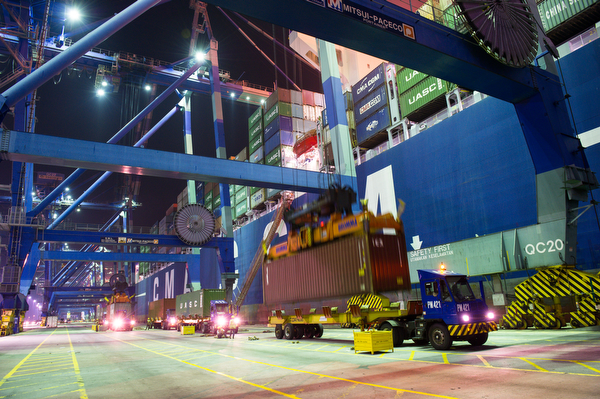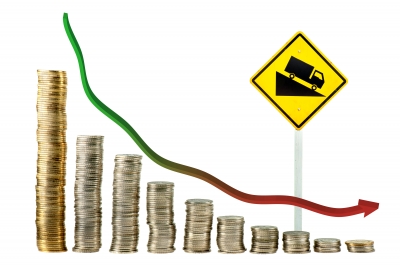
 The Philippine economy stands to lose as much as P320 billion and about a million factory jobs likely to be cut if the truck ban imposed by Manila continues without an alternative transport linkage between the Calabarzon economic zones and the Port of Manila.
The ensuing transportation bottleneck could pare at least 1% to as much as 5% off the country’s gross domestic product (GDP), mostly affecting non-technology export commodities, an economist from US banking giant Citigroup warned.
Citi economist for the Philippines Jun Trinidad suggested in a macro research note dated March 7 the economic cost of Manila’s truck ban may reach such a magnitude that it may later on require “intervention” from the national government.
The GDP costs were estimated to be as low as P61.2 billion to as high as P320 billion, dwarfing the potential benefits of P30 billion in real terms from the reduced traffic envisioned by the truck ban, Trinidad said.
“Manila’s truck ban casts a dark shadow on exports and GDP prospects. It may be early days, but we may be counting opportunity losses if the truck ban stays without having an alternative and effective transport option that links’ Calabarzon’s economic zones with the port of Manila,” Trinidad said.
Calabarzon consists of the Southern Tagalog provinces of Cavite, Laguna, Batangas, Rizal and Quezon (Calabarzon) , an industrial hub and a big contributor to Philippine GDP.
Under the new truck that Manila imposed starting Feb. 24, eight-wheeler trucks and vehicles with a gross weight of above 4,500 kilos are banned from plying Manila’s streets between 5am and 9pm in an apparent bid to ease the city’s traffic problem. City Hall has provided a 10am to 3pm window allowing trucks to ply the streets in the next six to eight months, but Philippine Economic Zone Authority (PEZA) officials and ecozone locators say it is insufficient.
“Local/foreign locators in the PEZA zones of Calabarzon with their export-bound cargo requiring international shipping services are destined for the port of Manila. Over time, export delays that divert foreign buyers’ interest could jeopardize production and jobs in Calabarzon,” Trinidad said.
On the other hand, Trinidad said technology producers that avail themselves of airline services in shipping out their goods may be spared, unlike non-technology manufacturers such as car parts makers which ship containerized products through Manila’s port.
“We sense simmering policy ‘conflict’ between national government plans that want to fast-track growth, including jobs/income creation, and local government objectives with legitimate but isolated cost/benefit concerns directed at limited constituencies,” Trinidad said.
As such, he said “state intervention may be needed if Manila’s truck ban results in transport bottlenecks and export delays.”
Image courtesy of worradmu / FreeDigitalPhotos.net