
 The Philippines’ export earnings in February reached US$4.654 billion, surging 24.4% from $3.741 billion a year earlier, mainly propelled by a 26.6% jump in overseas sales of electronic products, the National Statistics Office (NSO) reported.
The NSO also partly attributed the growth to increase in exports of six major commodities, namely mineral products, electronic equipment and parts, machinery and transport equipment, chemicals, woodcrafts and furniture, and other manufactures.
On a monthly basis, merchandise export receipts went up 6.3% from $4.379 billion in January.
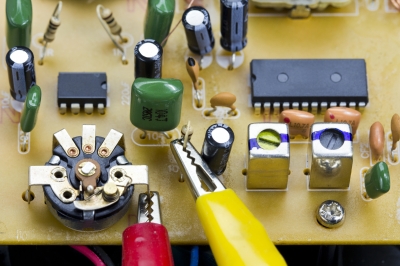
Electronic products, accounting for 40.4% of the total export revenue in February, remained the country’s top export with total receipts of $1.88 billion, up 26.6% from $1.485 billion in February 2013.
Month-on-month, electronic products accelerated 5.6% from $1.780 billion in January, with components/devices (semiconductors) comprising 24.7% of the total exports.
Semiconductors had the largest contribution among the major groups of electronic products with export earnings worth $1.149 billion. However, this dipped 0.5% from $1.155 billion recorded in February last year.
Export volume of electronic products increased compared with the same period a year ago.
Other manufactures constituted the second top export earner in February with revenue of $378.08 million, up 16.7% from $324.11 million in February 2013. Volume likewise expanded year-on-year.
Woodcraft and furniture were the third top export with revenue valued at $341.07 million or a 7.3% share to total exports. The figure increased 55.6% from $219.22 million in the same period a year ago. Similarly, its volume of shipments registered a positive growth over a year ago.
Machinery and transport equipment exports earned $252.17 million, soaring 91.8% from the previous year’s $131.50 million contributing 5.4% to the total export receipts.
Chemicals, accounting for 4.4% of the aggregate, ranked fifth with value posted at $202.85 million. This shot up 65.7% from $122.40 million in the same month in 2013.
Exports of manufactured goods in February were valued at $3.885 billion, accounting for 83.5% of the total export receipts, up 22.4% from $3.175 billion in February 2013 and by 2.3% month-on-month from $3.798 billion recorded in January.
Mineral products held a 5.1% share, soaring 139.9% to $237.32 million in February from $98.93 million a year earlier.
Japan accounted for the largest share of total Philippine exports in February with 25.4% to remain the country’s top export destination with revenue of $1.181 billion. That was a 67.2% gain from $705.93 million recorded a year ago.
China has a 14.7% share with its uptake of Philippine exports of $682.83 million, a 79.3% jump from $380.76 million a year ago.
The United States ranked third with a 13.4% share to total exports, with export receipts valued at $625.08 million. Hong Kong placed fourth with a 7.0% share worth $327.84 million, while Singapore was fifth with $311.06 million or a 6.7% share.
In terms of economic bloc, East Asia remained the country’s top market destination of merchandise exports, accounting for a 54.5% share of the total exports valued at $2.536 billion.
Image courtesy of Toa55 / FreeDigitalPhotos.net