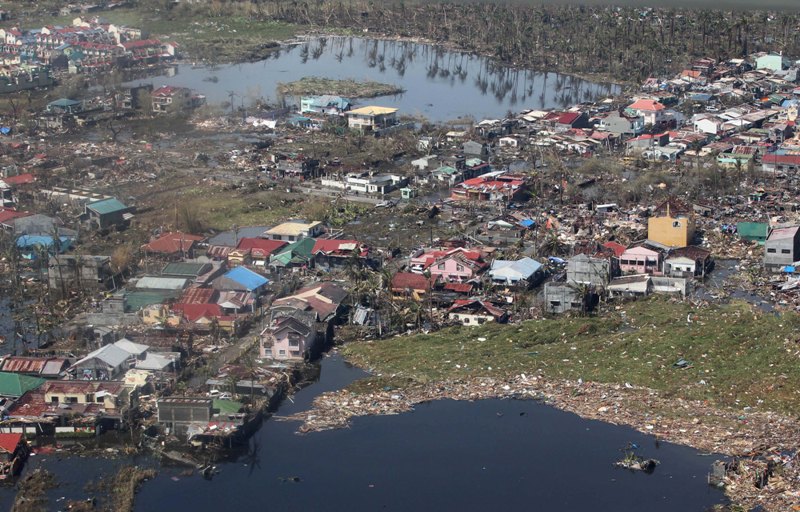
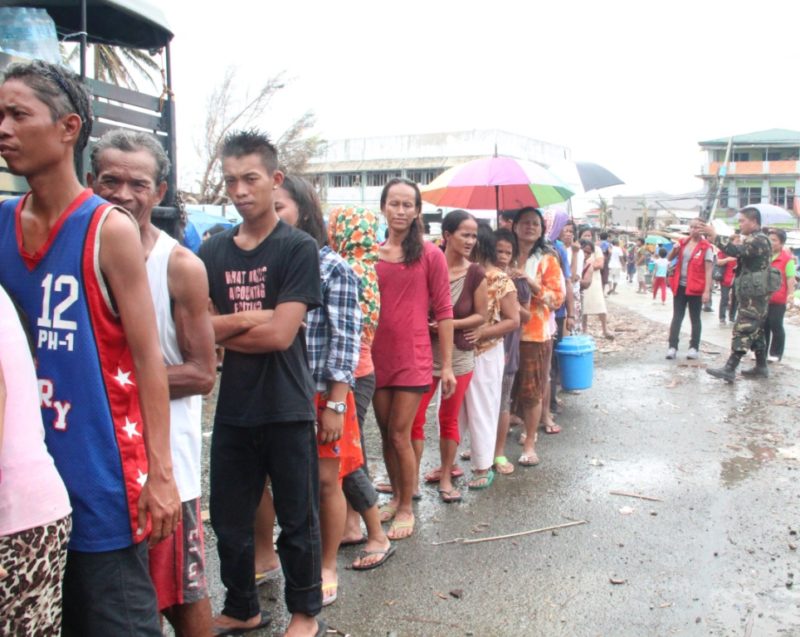

THE impact of super typhoon Haiyan (local name Yolanda) could drag down the growth of the Philippine economy to a much slower pace of 4.1% in the fourth quarter, the National Economic and Development Authority said Friday.
Full-year economic growth this year is now expected to settle between 6.5% and 7%, the NEDA said, a downgrade from its forecast of over 7% growth before the calamity.
The government’s official growth target for this year was set at a range of 6% to 7%.
In the first and second quarters, the economy grew 7.7% and 7.5%, respectively, the fastest growth rates in Asia for the two periods, equaling China’s expansion rates.
Meanwhile, Albay Governor Joey Salceda, an economist, said Yolanda may hurt the economy by as much as P604 billion, or 5% of the country’s gross domestic product.
With the government allocating P23 billion to rebuild damaged infrastructure, failure to replace the economic capacity lost to Yolanda would limit the country’s economic growth to 5%, said Salceda, who was elected recently as chairman of the United Nations’ Green Climate Fund (GCF).
“In dollar terms (US$14 billion), this is more than three times the reconstruction cost of (typhoons) Pepeng and Ondoy,” Salceda said in an SMS statement to the media.
“This will have a major punch on the fourth quarter GDP this year, but it will have its full impact lag into 2014. This overlaps with the negative impact of reconstruction demand from (typhoon) Pablo, (the battle of) Zamboanga and (earthquake in) Bohol, which total another P60 billion,” he said.
Salceda said he based his estimates on data cited by a Bloomberg senior analyst.
Salceda said the devastation caused by Yolanda underlines the urgent need make the GCF operational.
“Typhoon Haiyan puts more pressure behind the commitment of the GCF Board to operationalize the fund in 2014, conduct a resource mobilization exercise by September when the UN General Assembly meets in New York, and provide initial funding to capability building and preparedness activities of developing countries,” he said.
The government’s economic team had said earlier it expects the regional economies of Western, Central and Eastern Visayas to contract as much as 8% next year following Yolanda’s havoc.
Finance Secretary Cesar Purisima said the estimates were based on experience showing an average of 20 typhoons ravaging the country each year dented economic growth by a minimum of 0.5 percentage point, as well as on statistics on the regional economies.
The three Visayan regions’ economies combined contributed 12.5% of the country’s GDP.