 For the first time in three months, Philippine imports dropped in July despite the strong shipment of electronic products.
Latest data from the National Statistics Office showed imports dipped 0.8% to $4.964 billion in July from $5.001 billion in the comparable month.
Month-on-month, the latest import volume was also lower by 2.5% compared to June’s $5.089 billion.
From January to July, imports inched up 0.2% to $35.712 billion from $35.655 billion.
Electronic products remained the country’s top import, cornering 24.6% of the aggregate import bill in July with a value of $1.223 billion, up 4.8% from $1.167 billion in July 2011.
But the Semiconductor and Electronics Industries of the Philippines had already announced it will likely cut its growth outlook for the industry this year due to slow global demands.
According to the group, the revised 5-7% growth rate this year is unattainable due to sluggish production among global manufacturers.
Mineral fuels, lubricants and related materials were the country’s second top import with a share of 23.2% of the total or $1.152 billion, down 12.3% from $1.313 billion. The contraction was attributed to the 1.9% decrease in volume of inward shipments.
In third place was industrial machinery and equipment with a 6% share to total imports valued at $297.64 million. This represents a 28.2% hike from $232.25 million recorded last year. The expansion was brought about by a 54.5% hike in volume.
Rounding up the top 10 imports were transport equipment with $293.61 million; cereals and cereal preparations, $207.37; organic and inorganic chemicals, $139.86 million; plastics in primary and non-primary forms, $132.57 million; telecommunication equipment and electrical machinery, $107.23 million; iron and steel, $99.30 million; and chemical materials and products, $81.54 million.
Aggregate payment for the country’s top ten imports for July reached $3.733 billion or 75.2% of the total import bill.
Japan was the country’s biggest source of imports in July with a 11.6% share or $573.57 million followed by China with a 10.9% share amounting to $538.81 million.
The US came third, accounting for 10.1% or $501.28 million of the aggregate, up 8.7% from $461.01 million.
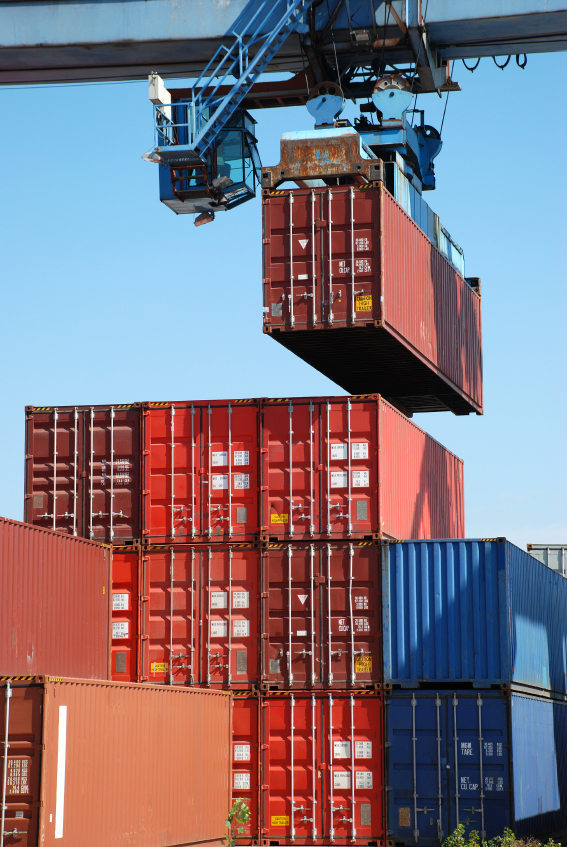
Image courtesy of Brown Corrugated Cardboard by Rawich / www.freedigitalphotos.net