

Philippine manufacturing output in the beginning of 2018 recovered from a series of declines in the last months of 2017.
The Philippine Statistics Authority, in its latest Monthly Integrated Survey of Selected Industries (MISSI), said the Volume of Production Index (VoPI) for manufacturing grew 21.9% in January 2018, higher than the 14.9% in the same period the previous year and a reversal from the 9.2% decline in December 2017.
The Value of Production Index (VaPI) likewise increased by 20.4%. The expansion brought the three-month moving average growth rate of both indexes back to positive territory at 1.1% and 0.4%, respectively.
“Manufacturing output is expected to sustain growth in 2018 on the back of robust consumer demand, higher government consumption, and continued gains in investments. The sustained momentum in global trade growth will also provide additional boost to manufacturing growth, particularly export-oriented sectors,” Socioeconomic Planning Secretary Ernesto M. Pernia said in a statement.
He explained that the growth of manufacturing was due to expansions in petroleum products, construction-related products, some export-oriented products, and food manufacturing. These expansions offset the declines in wood products, tobacco, transport equipment, and rubber and plastic products.
Pernia also noted that the industry firms’ outlook for the first quarter of 2018 remains optimistic as improvement in production capacity, new product lines, and enhanced marketing strategies are anticipated to increase both production and sales.
He said higher consumer demand, particularly for manufactured goods, is also expected to continue with the increase in households’ disposable income due to the Tax Reform for Acceleration and Inclusion (TRAIN).
However, he noted that firms remain cautious over some risks to growth such as the exchange rate, higher global commodity prices, and weather-related disturbances.
“The perceived negative effects, however, will be offset by improved infrastructure that is partly being financed by TRAIN. Moreover, the succeeding packages of the TRAIN are intended to make our tax regime internationally competitive,” Pernia said.
“To support the upward growth trajectory of manufacturing, the government must create and maintain an environment that is conducive to innovation and entrepreneurship, and enhance the production capacity of local suppliers of raw materials and intermediate goods, especially micro, small and medium enterprises,” he added.
The Cabinet official added that improving the connectivity among production sites, processing areas, and markets, as well as continuing to pursue bureaucratic and regulatory reforms to reduce the cost of doing business across all levels of government must also be pursued.
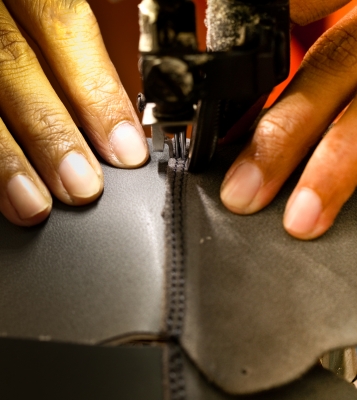
Image courtesy of PANPOTE at FreeDigitalPhotos.net