
The Philippines will pilot test next month the International Air Transportation Association (IATA) Secure Freight program.
An IATA security program for the global air cargo supply chain, Secure Freight promotes government standards and principles that support securing freight upstream early on in the supply chain and protecting it from unlawful interference until it reaches its destination.
Under the program, shippers, freight forwarders, and consolidators will be evaluated by an independent validator on their ability to properly handle air cargo, according to Rodrigo Reyes, IATA regional manager for Airport, Passenger, Cargo and Security-Asia Pacific, at a recent forum organized by the Philippine International Seafreight Forwarders Association and PortCalls.
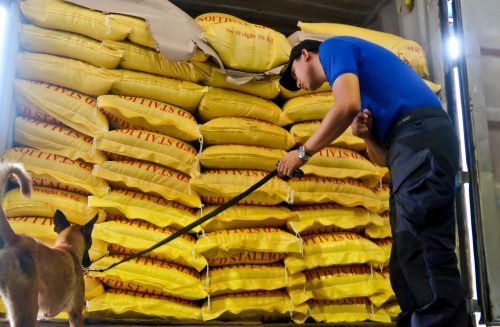
Reyes said a manufacturer or exporter can sign up as a consignor and a freight forwarder as a regulated agent and have their systems, processes and training programs evaluated. If they pass the audit, cargoes will no longer be screened and can go straight to the loading bay as long as there’s proof that while in transit the cargo has not been tampered with.
The IATA official said Secure Freight aims to improve efficiency of the supply chain because it reduces cargo handling at the airport at the same time strengthens the Philippines’ air freight security program to make it at par with other countries.
Reyes noted the program will also decongest queues at the airport especially when all cargoes arrive at the same time and have to be screened before loading.
“You could just imagine your cargo needs to fly within six hours but is queued, and the first in line has twenty tons of cargoes that need screening,” Reyes said. “So you’re losing the opportunity of the cargo to reach its flight.”
He noted that “if we are able to show that Secure Freight can be adopted and applied in the local setting,” IATA will come up with a report to the Office of Transport Security recommending the program. Reyes noted the success of the pilot project will depend on stakeholders’ reception to the program.
Secure Freight addresses deficiencies in cargo security regimes and brings countries up to the level of International Civil Aviation Organization Annex 17 (Security) and 9 (Facilitation) standards with the help of various tools. These tools include a Secure Freight Standards Manual and Secure Freight Operational Procedures, which provide practical guidance on how to move cargo and its associated information through the secure supply chain, as well as offer security program templates and validation and certification checklists for secure freight operators. – Text and photo by Roumina Pablo