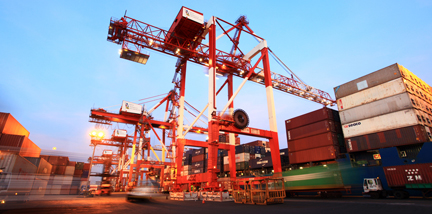
Cargo volume at Philippine ports grew 3.8% to 128.707 million metric tons (mt) for the first half of 2019 from 124.033 million mt year-on-year as both domestic and foreign cargoes recorded increases, according to latest data from the Philippine Ports Authority (PPA).
Accounting for 60% of the total, foreign cargoes rose 6% to 76.811 million mt in the first six months of 2019 from 72.490 million mt in the same period in 2018.
Imports increased 3.5% to 49.377 million mt from 47.698 million mt, while exports went up 11% to 27.434 million mt from 24.792 million mt.
Domestic cargoes, which contributed 40% to the total, slightly grew to 51.895 million mt, 0.7% higher than the 51.543 million mt recorded in the first half of 2018.
In terms of regions, North Luzon accounted for 40% of the total with 51.186 million mt, 2% lower than the 52.23 million mt it contributed in the same period last year.
South Luzon, which accounted for 17% of the total, handled 22.658 million mt, 6% higher than the 21.382 million mt serviced in 2018.
Visayan ports recorded 20.702 million mt or 16% of the total and also 16% higher than the 17.911 million mt reported last year.
Northern Mindanao, accounting for 15% of the total, also saw a 4% improvement in volumes to 20.142 million mt from 19.357 million mt. Southern Mindanao, which contributed 12% of the total, likewise processed higher volumes by 7% to 14.019 million mt from 13.153 million mt.
Container traffic
In terms of containerized cargoes, Philippine ports for the first half of 2019 handled 6% more to reach 3.849 million twenty-foot equivalent units (TEUs) from 3.631 million TEUs in the same period last year.
Domestic containers rose 5.2% to 1.555 million TEUs from 1.478 million TEUs, while foreign containers jumped 6.6% to 2.294 million TEUs from 2.153 million TEUs.
Ship calls, meanwhile, saw a 4.2% increment in the first half of 2019 to 246,937 vessels from 236,967 vessels in the first half of 2018. Domestic ship calls increased 4.4% to 241,388 from 231,286, while foreign ship calls dropped 2.3% to 5,549 vessels from 5,681 vessels.
Passenger traffic increased 6% to 45.459 million passengers in the first half of the year from 42.905 million in the same period last year. Disembarking passengers grew 5.1% to 23.003 million from 21.895 million while embarking passengers improved 8% to 22.308 million from 20.659 million. Cruise passengers, on the other hand, declined 57.7% to 148,358 from 350,626.
Roll-on/roll-off (Ro-Ro) traffic in the first six months of the year improved 8.7% to 3.930 million from 3.614 million in the same months last year. Inward Ro-Ro traffic went up 8.5% to 1.964 million from 1.810 million, while outward traffic grew 9% to 1.966 million from 1.804 million.