

Philippine manufacturing recorded a decrease in both volume and value in December 2017, said the National Economic and Development Authority (NEDA), adding that this marks the fourth month of decline in manufacturing from September to December 2017.
Based on the Philippine Statistics Authority (PSA)’s Monthly Integrated Survey of Selected Industries, NEDA reported that the Volume of Production Index (VoPI) for manufacturing contracted by 9.7% in December 2017, a reversal from the 21.7% growth in the same month in 2016.
PSA attributed the decrease to the contraction of the VoPI of four major sectors: chemical products (-67.3%), footwear and wearing apparel (-42.9%), tobacco products (-31.8%), and textiles (-30.5%).
The Value of Production Index (VaPI) likewise decreased by 10.3%, resulting in full-year 2017 growth of VoPI and VaPI by 0.4% and -0.5%, respectively.
Socioeconomic Planning secretary Ernesto Pernia said the December 2017 declines in manufacturing “are a cause for concern,” but noted that the government is also “fully aware of the opportunities that lie ahead: robust domestic consumption demand, increased demand from government, and government’s resolve to improve the ease of doing business.”
“With the higher take home pay of around 99% of Filipino income taxpayers because of the TRAIN (Tax Reform for Acceleration and Inclusion) law, household consumption will likely increase,” Pernia said in a statement.
He added that the continuous roll-out of infrastructure projects and programmed increase in social spending, among others, will also raise domestic demand for manufactured goods.
“To enable the manufacturing sector to take advantage of the increased demand, the government will continue to pursue policy reforms to facilitate business transactions,” Pernia said.
However, the Cabinet official said that the government must remain cautious about the short-term upward inflationary impact of TRAIN, as this may largely affect the cost of production, particularly that of energy-intensive manufacturing firms.
“Inflationary pressures, higher global raw material costs, and peso depreciation will continue to be a challenge to the sector’s growth,” Pernia added.
To support the growth of manufacturing, Pernia said local suppliers of raw materials and intermediate goods, especially small and medium enterprises (SMEs), must enhance their production capacity so that they can meet the expected higher domestic demand and recovering external demand. This can be done by expanding technology diffusion programs such as the Small Enterprise Technology Upgrading Program and the Shared Service Facility Project, he said.
Pernia also noted the importance of constructing road networks and rehabilitating damaged roads so as to link sources of raw materials and intermediate goods to processing sites.
“In terms of expanding market reach, we are continually pushing for the National Single Window and integrating it with the ASEAN (Association of Southeast Asian Nations) Single Window (ASW). This will effectively reduce the cost of doing business,” he added.
According to the Department of Finance, initial tests to assess the Philippines’ interconnection with other ASEAN economies, starting with Indonesia, via the ASW, have been successful.
READ: PH test link to ASEAN Single Window successful, says DOF
Pernia likewise emphasized the need to encourage competition in telecommunications by easing or lifting restrictions on foreign participation.
“Fast, reliable, and affordable internet services are needed for efficient business transactions and government services online,” he said.
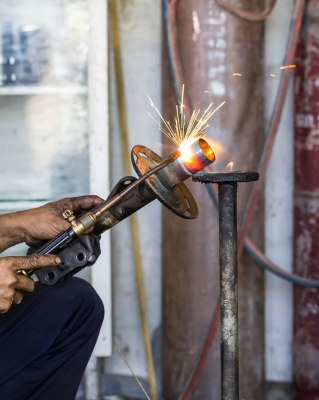
Image courtesy of Stoonn at FreeDigitalPhotos.net