

Improvement in the delivery of business-related government services as well as innovation across all firm sizes must be aggressively pursued to aid manufacturing output, according to the National Economic and Development Authority (NEDA).
The Philippine Statistics Authority’s Monthly Integrated Survey of Selected Industries (MISSI) reports that the Volume of Production Index (VoPI) for manufacturing declined by 6.5% in October 2017, down from the 9.9% growth recorded in the same month last year.
The Value of Production Index (VaPI) likewise decreased by 6.3%. This made the three-month moving average of VoPI and VaPI decline by 2.9% and 3.2%, respectively.
“Efficiency in delivering business-related government services or ease of doing business still needs to be improved. Ideally, business procedures across all national agencies and local government units must be automated,” Socioeconomic Planning Secretary Ernesto M. Pernia said in a statement.
According to the NEDA chief, the government also needs to create an enabling environment for collaboration between industry and the academe, adding that market-oriented research will facilitate the development of innovative products and processes.
However, Pernia said that the continued decline of production at the onset of the fourth quarter mirrored the less optimistic business sentiment of firms in the manufacturing sector.
“The Business Expectations Survey of the Bangko Sentral ng Pilipinas reported expectations of seasonal slack in demand for some products and stiffer competition due to business expansion of some firms as reasons for their less favorable outlook,” he said.
Pernia said that a predictable and consistent policy environment should be maintained to attract investments and reinvestments into the country.
Meanwhile, the production volume of major export-oriented products continued to increase, owing to the ongoing recovery of global trade, with Asian trade volume growing by 7.4% in the first half of 2017.
“The weakening of the peso and slightly higher global commodity prices can further sustain the growth of export-oriented firms,” the Cabinet official said.
Production volume and value of manufactured foods grew at a slower pace in the same month, while production volume of construction-related manufactures remained robust in October. The latter is attributed to the higher demand for non-residential buildings, particularly industrial and commercial buildings. The growth was also complemented by higher government infrastructure spending and capital outlays, which grew by 15.4% in the third quarter of 2017.
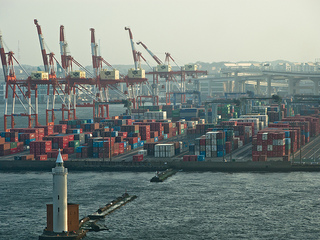
Image courtesy of suphakit73 at FreeDigitalPhotos.net