

Asian Marine Transport Corp., a roll-on/roll-off (RoRo) operator, is warning of layoffs in the domestic shipping industry if the Philippine government does away with the cabotage law.
“If this will be lifted, the Philippine domestic shipping industry would collapse because we cannot compete with the foreign companies. There would be massive displacements of seafarers and other ship related-industry work force,” said Paul Y. Rodriguez, president and chief executive of Asian Marine.
Rodriguez said the industry employs more than a million people, also serving as the training ground of overseas Filipino workers.
“So if there is no more domestic fleet then the OFW seafarer has no more training ship,” he said.
“The Philippine coast line is very long and porous so, with the entry of foreign vessels, the Philippine is now open to all sorts of illegal activity such as smuggling, invasion, extraction of minerals and transit points for illegal drugs,” Rodriguez said.
He urged the government to further study the proposed amendments to the Cabotage Law.
A fortnight ago, Maritime Industry Authority (MARINA) administrator Dr Maximo Q. Mejia, Jr. expressed his support for liberalizing the cabotage law, simply for the reason that lifting the statute itself is “too hard”.
The country’s shipping industry regulator explained that abolishing the cabotage law requires amending the 1987 Constitution of the Philippines.
Mejia said allowing foreign-flagged vessels to call at more Philippine ports was in line with President Benigno Aquino’s call to reduce shipping costs.
His concerns are that the country’s shipping industry is not competitive enough for total removal of cabotage, and local operators would be disadvantaged in terms of taxation.
A third concern is the current state of port infrastructure, which discourages foreign carriers from entering the market.
Philippine regulation of cabotage stems from the Domestic Shipping Development Act of 2004 (Republic Act 9295) and the older Tariff and Customs Code of the Philippines (RA 1937).
RA 9295 explicitly bans foreign firms from transporting cargo between local ports unless MARINA grants them a special permit.
RA 1937, meanwhile, derives from the American-era Jones Act of 1920 and covers basic elements of coastwise trade, including government’s franchising and discretionary powers.
Pending bills on cabotage law reform include House Bill No. 1789, HB 2563, and Senate Bill No. 1359.
The Philippine Interisland Shipping Association (PISA) said pursuing the reform may result in domestic companies moving their company registries to Hong Kong or Singapore to minimize income taxes and the excise tax on fuel.
PISA said foreign ships enjoy benefits not accorded to local counterparts.
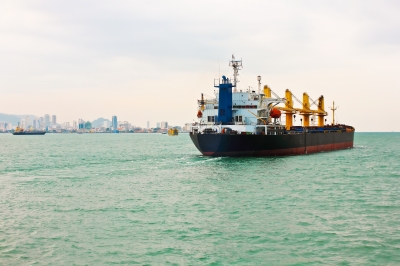
Image courtesy of mapichai / FreeDigitalPhotos.net