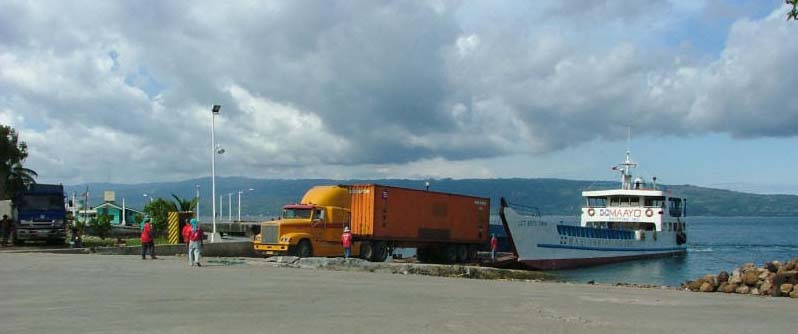


The Philippine Ports Authority (PPA) is spending around P7 billion to rehabilitate the roll-on/roll-off (Ro-Ro) terminals around the country and construct new ones to provide connectivity and address demands for passage and cargoes.
The budget, to come from internally generated funds, will be spent on around 30 Ro-Ro terminals on the three routes—Eastern, Central, and Western Nautical Highways—under the Strong Republic Nautical Highway (SRNH).
The projects include rehabilitating and improving Ro-Ro terminals; enhancing existing but unutilized Ro-Ro terminals to make them usable again; and constructing new ones in areas identified by PPA to have demand.
PPA general manager Atty Jay Daniel Santiago noted that new terminals are needed near several Ro-Ro ports that are usually incapacitated during weather disturbances and calamities. He said there has to be alternate ports to ensure redundancy and connectivity, especially in times of disasters, and to enhance the experience of the sea-riding public.
Santiago said PPA is coordinating with the Maritime Industry Authority for the franchise of Ro-Ro vessels that will serve new routes identified by PPA.
Asked if constructing new Ro-Ro terminals near existing ones would raise operational costs for the port authority, Santiago said that “accessibility is an ever growing need” and that ports have limits so new ones should really be considered.
He also noted that while many prefer to travel by air, not everyone can afford the cost of an air ticket so there should always be an alternative means of transportation.
He added that the government is just starting to construct airports and their completion would take time, while improving and constructing new Ro-Ro terminals is faster.
PPA has already started bidding out the 30 Ro-Ro terminal projects, and some projects have already started construction or rehabilitation during the last quarter of this year. The others are expected to start next year, and all are scheduled to be completed by 2019 to 2020.
Meanwhile, Santiago said PPA is not expecting port congestion this month as shipments for the holidays had already been delivered months before.
Earlier this year, PPA said it would revisit the country’s Ro-Ro Terminal System (RRTS) to ensure it continues to serve the needs of the trade and tourism sectors. RRTS is a network of Ro-Ro ferry terminals that links the country through Ro-Ro ships.
PPA’s move is also in response to the call of the private sector, specifically of Ro-Ro operators, for the public sector to improve port facilities amid Ro-Ro operators’ initiative to modernize their fleet.
According to a study released by state-run think tank Philippine Institute for Development Studies, implementation of the RRTS in the Philippines has yielded positive results, raising household incomes and invigorating trade activity.
Implemented in 2003, the RRTS was able to integrate roads into water transportation by allowing vehicles to directly board the ship without unloading their cargoes and to be easily transferred from one island to another.