
 The confidence of the shipping industry improved for the third successive quarter in the three months to end-November 2016, reaching a 15-month high since August last year, according to consultancy Moore Stephens.
In November 2016, the average confidence level expressed by respondents was 5.6 out of 10.0, equaling the highest rating since August 2015 and up from 5.4% in August 2016.
Richard Greiner, Moore Stephens’ partner for shipping & transport, said, “This is the third successive increase in shipping confidence recorded by our survey. So despite overtonnaging, weak freight rates, declining demand, insufficient recycling, Brexit, Syria, Trump, despite everything, shipping is still looking up, rather than down. This is not to deny the reality of today’s difficult market, or the sluggish economic climate. But it does say much for the strength of shipping’s backbone and the quality of its mettle.”
Charterers’ confidence this time increased by 2.0 points, to 6.8, the highest figure in the life of the survey for such respondents. The confidence of owners was up from 5.3 to 5.4, of brokers from 4.5 to 5.6, and of managers from 6.0 to 6.4. The survey was launched in May 2008 with an overall confidence rating of 6.8.
Confidence was up in Asia, from 5.5 to 5.7, in Europe from 5.2 to 5.4, and in North America from 5.8 to 5.9.
A number of respondents felt that the bottom of the cycle had been reached and that the only way was up. Particular concern was expressed about overtonnaging, insufficient recycling, and the cost of regulatory compliance. Respondents believe that the oversupply of tonnage will cease when the banks write down bad loans and force owners to sell for scrap, and the weak or unlucky fold or are gobbled up.
The likelihood of respondents making a major investment or significant development over the next 12 months was unchanged, at 4.9 out of 10.0. According to one respondent, “It is hard to see how major investment to meet environmental regulations can be justified in the current climate.”
The number of respondents expecting finance costs to increase over the coming year rose from 35% to 53%, the highest level for five years. “Major investment will be required over the next few years to meet increasingly stringent environmental regulations,” said one respondent, “at a time when earnings are on the floor and bank finance is hard to come by.”
Competition is expected to influence performance most significantly over the next 12 months, just ahead of demand trends, followed by finance costs and tonnage supply. One respondent said, “If demand remains weak, we don’t anticipate any improvement in the shipping markets over the next five years, particularly for dry bulk cargoes.”
In the container ship sector, the number of respondents expecting higher rates over the next 12 months rose from 22% to 27%, but there was a five percentage-point increase, to 21%, in those anticipating lower rates.
Said Greiner, “Many of our respondents felt that things can only get better. They are probably right. But for that to happen, freight rates will have to go up. Perhaps it is safer to say for the moment that, if we want things to stay as they are, things will have to change.”
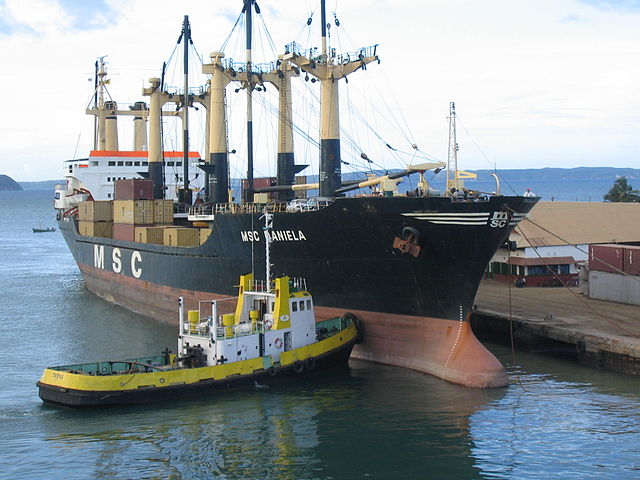
Photo: Clipper