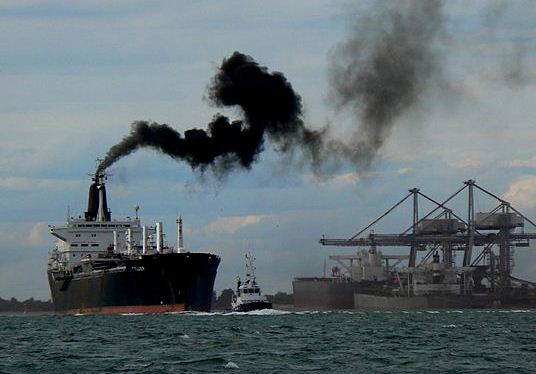

 The shipping industry is urging member states of the International Maritime Organization (IMO) to make progress on key challenges around the global sulfur cap to avoid compromising safety or unfairly penalizing individual ships.
The industry’s representatives—Baltic and International Maritime Council, International Chamber of Shipping, International Association of Dry Cargo Shipowners, International Association of Independent Tanker Owners, and World Shipping Council—have co-sponsored a number of submissions to IMO to help smooth the implementation of the global 0.5% sulfur in fuel cap, in advance of the critical meeting to be held in London during the second week of July.
These submissions include a paper on a standard format for a ship-specific implementation plan with many actions that ships may need to consider for achieving compliance, but also a call for a practical and pragmatic approach from IMO member states when verifying compliance with the 0.5% global sulfur cap.
Others are papers on the safety implications associated with 2020 fuels and their respective challenges; a draft standard for reporting on fuel oil non-availability; proposals for amendments to MARPOL Annex VI to require sampling points for fuel oil; and verification issues and control mechanism and actions.
In a statement, the shipping trade associations said the industry is fully committed to the successful implementation of the global sulfur cap on January 1, 2020.
“Through their own proposed standard implementation plan, ship owners and ship operators are committed to do what is necessary and what is under their control to meet the standards required. But the worldwide implementation of this game-changing new regulatory regime will be far more complex than the previous introduction of sulphur Emission Control Areas for shipping not least because of the sheer magnitude of the switchover and the quantities and different types of fuel involved,” it said.
In 2020, as well as using distillates to comply with the 0.5% sulfur cap, many ships will have to use blended fuel oils and new products under the new IMO ruling.
“On top of the absence of global standards for many of the new blended fuels that oil refiners have promised, there are potentially serious safety issues, including those related to the use of compliant but incompatible bunkers. As an example, if bunkers turn out to be incompatible it could lead to loss of power on the ship,” said the statement.
It added that as something of this magnitude has never previously been attempted before on a worldwide basis, “safe and successful implementation will necessitate the supply of fuels, in ports around the world, which are compatible as well as legally compliant,” it pointed out.
“With the scale of the technical challenges involved and the likelihood of teething problems, it will be important for port state control authorities to exercise a pragmatic and realistic approach to enforce compliance during the initial months of the global switchover, which will come into effect at the stroke of midnight in just 18 months’ time,” it further said.
Photo: Roberto Venturini