

SIA Cargo plans to implement the electronic air waybill (eAWB) for all shipments departing from Singapore effective January 1, 2012.
eAWB is a key initiative towards achieving a paperless airfreight industry. It refers to the physical copy of the air waybill to be replaced by the electronic version of it (FWB).
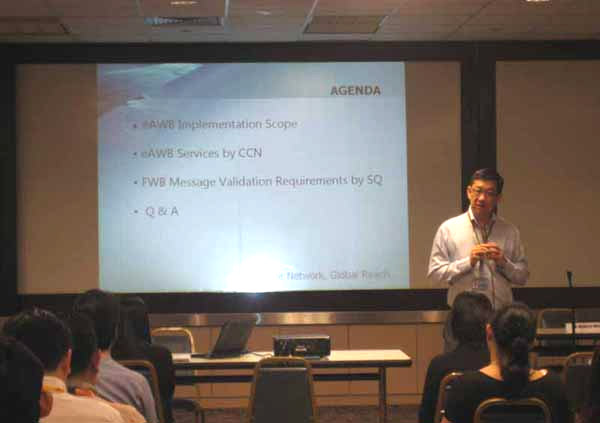
Freight forwarders in Singapore were recently briefed on how the initiative will be implemented and how to comply with requirements.
Aside from SIA Cargo, other airlines are also in the midst of implementing the initiative.
With the industry moving towards this direction, Cargo Community Network (CCN) has developed a range of eAWB services so it can provide the industry with solutions needed to make it easier for them to adopt eAWB in their operations.
As a neutral party and gateway for the FWB messages, CCN will host the eAWB in a central depository. It will be the source of one true copy of the eAWB which will be stored in its database for five years as per accounting requirements. It can therefore be accessed and printed for recording and dispute purposes. This copy can also be extended via eCargoPouch for your overseas office and consignee, for their pre-arrival notifications.
In addition, CCN will generate a Cargo Receipt which the agents can access and print via CCNhub, when necessary. It permits identification of the shipment that has been accepted and deemed “Ready for Carriage” (RCS). It will also be kept in the database up to 5 years.
Another important feature of CCN’s eAWB services is that CCN will provide notification alerts when there is a difference in the weight and pieces after cargo lodge-in with details contained in FWB sent. The alerts can be via email, mobile phone and Apps application and agents can revise their FWB easily with just a click or touch via these means. This will minimize the need to have round-the-clock operations.