
Traffic at the port of Subic is expected to flow more smoothly following the implementation of a pre-advise system for all export cargoes seen to speed up gate transactions, reducing both truck and box dwell times.
Subic Bay International Terminal Corp. (SBITC), in an advisory, said all export containers (export full, export empty and empty in) “should be pre advised by the Shipping Line using our N4 Pre Advise System, which was already made available to them.”
“With this, all export containers are already encoded in our System before truck approaches In Gate for Gate In transactions,” SBITC said.
The terminal operator said the same pre-advise system will be used for incoming empty containers.
“With this system, we will minimize truck dwell time during In Gate since our Gate Checkers need not input pertinent data such as the Status of Container (Full or Empty), Container Number, Container ISO Code, Booking Number, Outbound Vessel information, POD (port of destination) and the like before they execute the In Gate Process,” SBITC further said.
The system was fully implemented on July 13 and SBITC said they are requesting their partners and clients “to bear with us while we are in the implementation stage.”
In place at MICT
The same pre-advise system was introduced at the Manila International Container Terminal (MICT), operated by SBITC’s mother company, International Container Terminal Services, Inc., last March.
ICTSI vice president and head for Asia Pacific region Christian Gonzalez earlier said that due to the pre-advise system, “empties and exports no longer have to wait for the booking to be made inside the office and they no longer have to wait for the checkers to check the container.”
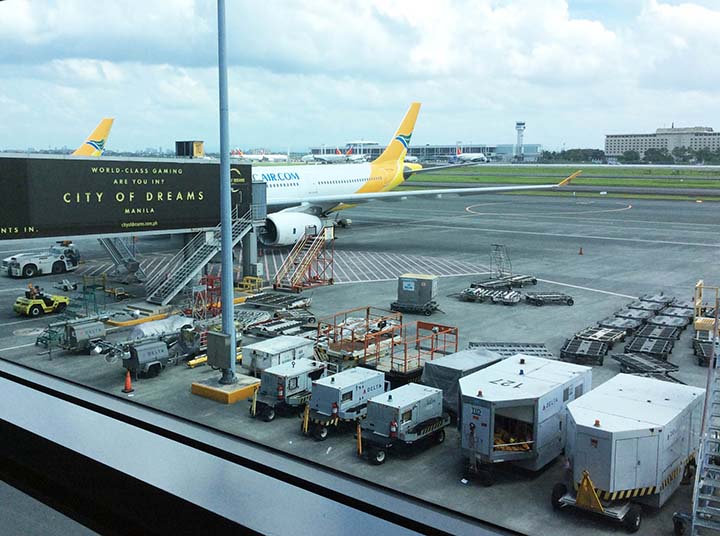
He added that empty and export containers used to eat up space in the truck holding area while waiting for their turn. But now, all that’s left in the parking area are empty chassis.
Cargo traffic at the Subic port increased significantly in 2014, reaching 77,177 TEUs, more than double the 37,469 TEUs handled in 2013.
For the first quarter of this year, containerized cargoes processed at the port rose 28% from the same period last year.
The positive development came after massive port congestion was experienced in Manila ports due to the imposition of the daytime truck ban by the Manila city government in Feb 2014. Shippers looked for alternative ports to ship through, and this benefited Subic and Batangas ports.
More shipping lines are also now calling Subic port, with some others increasing their frequencies. Subic port callers include APL, Wan Hai, Swire Shipping, MCC Transport, NYK, SITC, and K Line. – Roumina Pablo