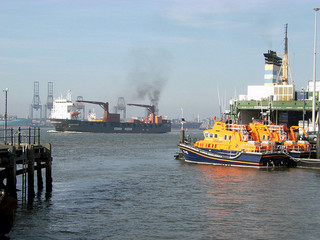

 A cascade of ocean vessels between 8,000 and 10,000 twenty-foot equivalent units (TEUs) is expected to be delivered from now until 2015, leading to supply overshooting demand by a wide margin and raising “intriguing” questions about how the excess capacity will be handled, according to Drewry.
Ocean carriers have returned to ordering vessels between 8,000 and 10,000 TEUs in large numbers, suggesting that either overcapacity is looming, or unusual service developments are in the pipeline, it added.
Latest figures from the UK-based research group indicated that by year-end, 55 vessels averaging 8,600 TEUs will already have been delivered, increasing capacity by a remarkable 18 percent, well ahead of global cargo growth.
A further 40 are due for delivery next year, which will increase it by another 11.6 percent. Moreover, 45 more are due for delivery in 2015, adding yet another 11.6 percent year-on-year growth.
In addition, around 20 existing vessels in the size range are due to become surplus capacity once Maersk Line, CMA CGM, and Mediterranean Shipping Co. launch their Asia-North Europe services under the proposed P3 alliance in the second quarter of 2014.
Another 44 vessels averaging 14,638 TEUs in size are due for delivery next year, probably displacing the same number of vessels between 8,000 TEUs and 10,000 TEUs.
On the demand side, the P3 alliance will probably need at least 30 of the units for its five trans-Atlantic services, and its competitors will presumably react by fielding more of their own.
The G6 vessel-sharing alliance of APL, Hapag-Lloyd, Mitsui O.S.K. Lines, Hyundai Merchant Marine, Orient Overseas Container Line, and Nippon Yusen Kaisha has also announced plans to extend its services to these trade lanes, as well as to the route between Asia and the West Coast of North America. It has yet to reveal its vessel deployment plan, however.
Overall, the supply of vessels in this range “looks set to well exceed demand growth, therefore, so where the excess will be deployed is intriguing,” said Drewry. “The current order book of vessels between 8,000 TEUs and 10,000 TEUs appears excessive.”
Photo: Martin Pettitt