

Marking of petroleum products, whether imported or manufactured locally in the Philippines, will now be mandatory under the recently signed Tax Reform for Acceleration and Inclusion (TRAIN) Law or Republic Act (R.A.) No. 10963.
Section 148-A of the law states that in consultation with the commissioners of the Bureau of Customs (BOC) and Bureau of Internal Revenue (BIR) and with the energy secretary, the finance secretary “shall require the use of an official fuel marking or similar technology on petroleum products that are refined, manufactured, or imported into the Philippines and that are subject to the payment of duties and taxes, such as but not limited to unleaded premium gasoline, kerosene, and diesel fuel oil after the taxes and duties thereon have been paid.”
R.A. 10963, which was signed by President Rodrigo Duterte on December 19, amends several sections of the National Internal Revenue Code of 1997, as amended. It is the first package under the comprehensive tax reform program of the government. The fuel marking and monitoring system, meanwhile, is part of efforts to curb oil smuggling in the country.
Under the new law, the government shall engage only one fuel marking service provider. To be supervised and directed by the BIR and BOC commissioners, the provider shall provide, monitor, and administer the fuel markers; provide equipment and devices; conduct field and confirmatory tests; and carry out other acts necessary to implement the program.
“All costs pertaining to the procurement of the official fuel markers shall be borne by the refiner, manufacturer or importer of petroleum products as the case may be,” the law said.
It added that government may subsidize the cost of official fuel markers in the first year of implementation.
The marking will be mandatory within five years of the effectivity of R.A. 10963.
The Department of Finance (DOF) earlier said it expects the fuel marking and monitoring system to be in place by the second half of 2018.
Finance Secretary Carlos Dominguez III said the government will have to decide the kind of fuel marking service to implement, given the various offers from private providers and the kind of training BOC and BIR personnel will have to undergo to familiarize themselves with the new system.
Dominguez likewise said he has agreed that the service and supply of equipment for the fuel marking system will have to be approved by the Investment Coordination Committee, as suggested by the Department of Budget and Management.
According to DOF Undersecretary Antonette Tionko, the procurement process is expected to be finished by the first quarter of 2018.
DOF has estimated revenue losses (value-added tax and excise taxes) from smuggled or misdeclared fuel at P26.87 billion (about US$565.68 million) in 2016 alone.
The Asian Development Bank has pegged the losses at a higher figure of P37.5 billion annually, while a study commissioned by the local oil industry places them at an even higher P43.8 billion per year.
The Institute for Development and Econometric Analysis estimated that “smuggled gasoline accounts for an average of 23% of gasoline consumption from 2000 to 2006,” while “smuggled diesel accounts for an average of 6%.” – Roumina Pablo
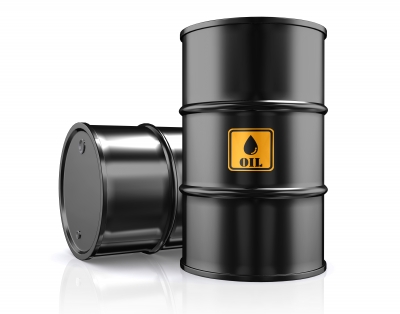
Image courtesy of yodiyim at FreeDigitalPhotos.net