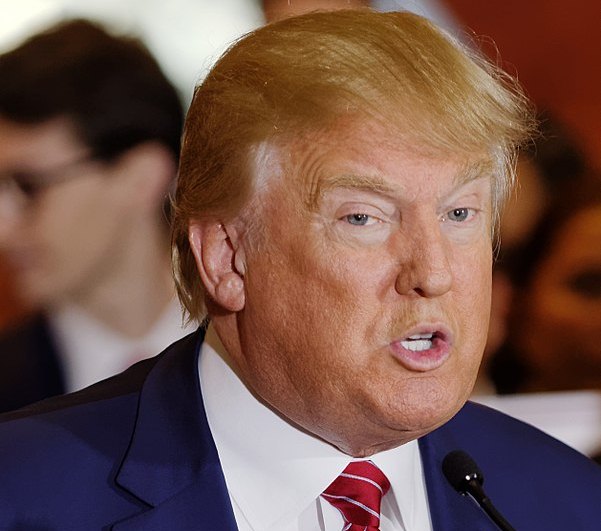
 U.S. President Donald Trump said on January 25 that he would reconsider U.S. participation in the revised Trans-Pacific Partnership (TPP) trade deal if it is “substantially better.”
“I would do TPP if we were able to make a substantially better deal,” Trump told CNBC in an interview while attending the World Economic Forum (WEF) in Davos, Switzerland.
“The deal was terrible, the way it was structured was terrible. If we did a substantially better deal, I would be open to TPP,” he said.
Last January, Trump announced the official withdrawal of the U.S. from the Pacific trade deal in a largely symbolic move, as the U.S. Congress hadn’t approved the deal yet.
During his presidential campaign, Trump promised to never sign massive trade agreements like the TPP, which he said would “destroy” U.S. manufacturing.
Previously in November 2017, trade ministers of the 11 remaining member countries of the deal, namely, Australia, Brunei Darussalam, Canada, Chile, Japan, Malaysia, Mexico, New Zealand, Peru, Singapore, and Vietnam met for the APEC Economic Leaders’ Week in Da Nang, Vietnam, and agreed to maintain the TPP after the U.S.’s pullout.
Earlier this week, the 11 member nations agreed to sign the accord, now renamed Comprehensive and Progressive Agreement for Trans-Pacific Partnership (CPTPP), at an official ceremony slated for March.
The agreement was reached during a two-day meeting January 22 to 23, 2018 in Tokyo, Japan, to finalize the CPTPP, where chief negotiators of the member nations addressed disagreements among them, including Canada’s restriction of foreign films to protect its cultural industries.
Japan and Australia have become the flag bearers of the deal since the U.S.’s withdrawal, with Prime Minister Shinzo Abe and Prime Minister Malcolm Turnbull pledging in Tokyo recently their “personal commitment” to sign and seal the deal by March.
Japanese public broadcaster NHK reported March 8 as the date being mooted for the signing ceremony, to be held in Chile.
Trump is expected to address the WEF on January 26 to lay out his “America First” policy, which has led his country away from multiple multilateral pacts and infused anxiety in both its allies and the broader world.
Photo: Michael Vadon