 Member-carriers in the Transpacific Stabilization Agreement (TSA) are recommending further general rate increases (GRIs) for all shipments on the Asia-U.S. trade lane from July, saying present rates do not adequately cover rising costs.
TSA recommends rate hikes of US$400 per 40-foot container to the U.S. West Coast and $600 to all other destinations effective July 1, 2013.
TSA executive administrator Brian Conrad said trans-Pacific freight rates are still not keeping pace with rising costs. “The revenue issue is not going away. We have to make the case repeatedly that short-term, off-season rates cannot be extended for 12 months or longer in contracts, and that new capacity entering the Asia-U.S. market reflects global trends and an investment in productivity to meet future long-term demand.”
He said that despite modest revenue gains in 2013-14 service contracts and subsequent increases by individual carriers in May, rates “remain well below target levels needed to maintain profitability and invest for future growth.”
Conrad said the increases were partly offset by rising port charges, labor and inland transportation costs in both the U.S. and Asia, including recent wage increases for East Coast and Hong Kong longshore workers, higher Suez Canal costs, and higher rail and truck rates for inland equipment repositioning.
TSA is a research and discussion forum of major container shipping lines serving the trade from Asia to ports and inland points in the U.S. Its members include APL, China Shipping Container Lines, CMA-CGM, Cosco Container Lines, Evergreen Line, Hanjin Shipping, Hapag-Lloyd, Hyundai Merchant Marine, Kawasaki Kisen Kaisha, Maersk Line, Mediterranean Shipping Co., Nippon Yusen Kaisha, Orient Overseas Container Line, Yangming Marine Transport, and Zim Integrated Shipping Services.
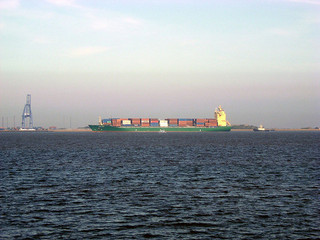
Photo: Martin Pettitt