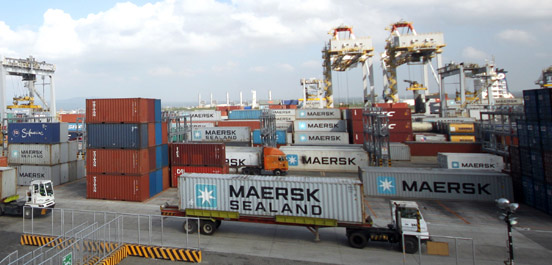
THE poor navigability of Pasig River is contributing to increased logistics costs resulting from slower transit time and higher fuel and maintenance expenses for shippers who use the river.
The Association of Private Port Operators and Owners of the Philippines (APPOOP) said companies using the river are losing 5-10% of their revenues as deliveries are being done only during high tide due to the river’s siltation problem.
The river is only three meters deep. APPOOP said the ideal draft is between five and seven meters.
The losses increase if the operator’s vessel fails to deliver during high tide as it has to wait another 24 hours before the next delivery. This results in higher overheads eventually passed on to consumers.
APPOOP claimed some companies have since chosen to close shop and relocate elsewhere to save on expenses.
The group is batting for continuous maintenance dredging of the river instead of a one-time dredging as is the policy now.
“Until government changes its dredging and maintenance plan for the river, (the policy) will continue to result in business inefficiency and higher cost for consumers,” APPOOP said.
The maintenance dredging will not only save the government much money but will also guarantee that the river is dredged and maintained properly, the group noted.
It said the current program is costing government million of pesos, with contractors more concerned with their profit margin.
Contractors are just putting to work dredging machines at certain points, stopping after some time, leaving the machines, then eventually pulling them out, APPOOP said. No improvements were made upon evaluation of the activity, with siltation at the same time becoming a big issue.
“(We need) a long-term plan where dredging will be slowly (done)… instead of a band-aid solution like what is being enforced,” APPOOP said.
“Pasig River is a port itself. It has to be properly maintained, dredged and monitored to function properly,” the group stressed, adding that “dredging should be done like clockwork.”
The river has now been declared a critical water body because of the unspeakable amount of waste dumped into it daily by households and industries. About 330 tons of industrial and domestic wastes are discharged everyday in this waterway, depleting the biochemical oxygen needed to support marine life.
In 1999, President Estrada ordered a 15-year project to clean the river until 2014 — and hopefully see fish return to its now filthy waters.
Backed by $176.8 million from the Asian Development Bank (ADB), the project entails the redevelopment of riverside slums, relocation of tens of thousands of squatters and the launch of a passenger ferry.
At the halfway mark, government officials and ADB experts say progress has been made, but much more needs to be done if the Pasig is to regain its former splendor.
In early 2000, the Lighterage Association of the Philippines—the main users of the Pasig River—has partnered with the City Government of Manila to dredge and maintain the river but no significant improvement has been reported to date.