The Vietnamese government is giving companies the right to self-declare food product origins and quality in a move intended to assist food and beverage importers and producers by reducing inspection times, costs, and criteria.
Under Decree No. 15, effective since February 2, 2018, companies now have the right to self-declare, replacing the long-standing method of keeping records at public management agencies, said a news report from Vietnam News Agency.
As such, only a handful of food products will be requiring special inspection by the Ministry of Health before entering the general market. However, regular inspections would still apply to all imports, unless otherwise specified.
Nguyen Thanh Long, deputy minister of health, said on the Vietnam Customs’ online portal that once the new regulations are in place, about 95% of food imports would be exempt from specialized inspection.
Long added that regular inspection time would also be shortened from seven working days to three, while specialized inspection time would be shortened from 10 working days to seven.
He said the new decree aims to dramatically reduce registration procedures and slash transfer time between pre-check and post-inspection to create favorable conditions for food producers and importers.
By his estimate, Vietnamese firms throughout the country would save about seven million eight-hour working days and about VND3 trillion (US$133.6 million) per year, thanks to these changes.
Long said that state management agencies would strengthen post-inspection sanctions for importing firms if any malpractices were detected.
Nguyen Thanh Phong, director general for food safety of the Ministry of Health, said the decree adhered to global food management practices in production and business conditions.
He named small and medium-sized farms, processing facilities, restaurants, and food stores as examples of businesses with the right to self-declare and take full responsibility for their own food product quality.
However, health food used for medical purposes or special diets and compound-food additives with new uses must be registered at the ministry, while nutritional products for children up to 36 months of age must be registered at local health departments.
Additionally, the decree removes state inspection for products that have been granted certificates of quality by the signatory country, brought for personal use, or as gifts by individuals entitled to diplomatic privileges and immunities.
Food products temporarily imported for sale at duty-free shops and those imported only for initial processing without being later sold on the domestic market have also been exempted.
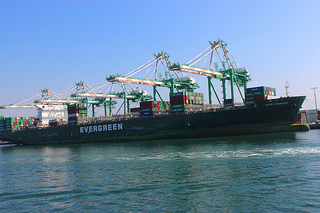
Photo: Overlooking Da Nang Port