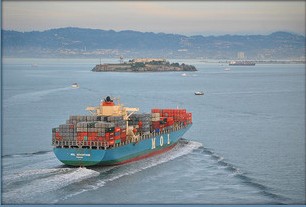

 Member-economies of the Asia-Pacific Economic Cooperation (APEC) improved the ease of doing business in the region by 8.2 percent between 2009 and 2011, exceeding their 5 percent target and paving the way for greater economic activity in the area.
The findings were revealed in the new “2012 APEC Economic Policy Report,” released on October 4, which assesses the 21 member-economies’ progress in implementing the APEC Ease of Doing Business Initiative adopted in 2009.
The initiative aims to foster a 25 percent more favorable business environment in the Asia-Pacific region by 2015.
“APEC economies and stakeholders continue to work together to make doing business throughout the region cheaper, faster and easier,” said Raymond Greene, chair of the APEC economic committee which produced the report.
The Ease of Doing Business Initiative’s five priority areas include starting a business, dealing with construction permits, getting credit, trading across borders, and enforcing contracts.
“The progress being made towards achieving APEC economies’ ease of doing business goals is significant, particularly in certain areas such as starting a business which has advanced the most in average terms,” said Dr. Denis Hew, director of the APEC Policy Support Unit which assisted in the report’s preparation.
Between 2009 and 2011, the median time to start a business in the APEC region fell 56.5 percent, from 23 to 10 days. By contrast, it fell only 12.5 percent for the rest of the world, from 20 to 18 days, APEC said.
Member-economies have also made considerable inroads in making trading across borders more cost effective, Dr. Hew noted.
In 2011, the average cost to export a container in the APEC region was US$835, about 44 percent cheaper than the $1,486 amount for the rest of the world. And to import a container in the region it was 49 percent cheaper at $896 compared to $1,768 elsewhere.
“While APEC economies have clearly improved the business environment in the Asia Pacific there is still much more to be done on an individual and collective basis,” Dr. Hew said. “This includes smoothing out the unevenness of progress across the region, for example, in dealing with construction permits and getting credit.”
Photo: Stefan