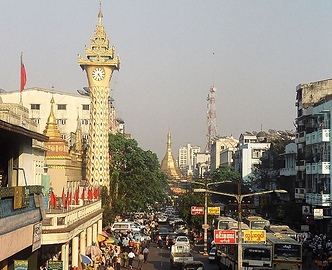

 Myanmar’s fragmented and under-resourced transport sector needs a top-to-bottom overhaul to meet an expected boom in demand for quality roads, railways, airports and transport services in the coming years, says a new Asian Development Bank (ADB) study titled “Myanmar: Transport Sector Initial Assessment.”
“For the benefits of Myanmar’s anticipated growth to truly reach people in all corners of the country, its network of roads, railways, inland waterways and airports will need a coordinated path to improvement,” said James Lynch, director of the transport and communications division in the Southeast Asia Department at ADB.
Adds Lynch: “This is vital not only for the country’s development, from the cities to the remote rural areas, but also to transform the country into a land bridge linking Southeast Asia and South Asia.”
Among the country’s many pressing development concerns, transport remains a top priority since building and upgrading roads will lay the foundation for sustainable and inclusive growth.
The study shows that while Myanmar has managed to keep its core network of roads in reasonable condition, less than half of the country’s main roads are paved for all-weather conditions. Outside main urban centers, less than 10 percent of secondary roads are all-weather, posing a serious barrier to accessing essential services, markets, and economic opportunities.
The railway sector also faces significant challenges, with over a quarter of the country’s fleet of 400 locomotives more than 40 years old. Consequently, the 375-kilometer trip between the economic capital of Yangon and the political capital of Nay Pyi Taw takes almost twice as long by rail—nine hours—as by road.
The study recommends restructuring the complex and overlapping institutional structure that impedes effective transport sector management; stepping up targeted investments in roads, railways, and ports; bringing tariffs for government-controlled transport services closer to commercial levels; and gradually reducing the state’s very dominant role in the sector.
Photo: yeowatzup