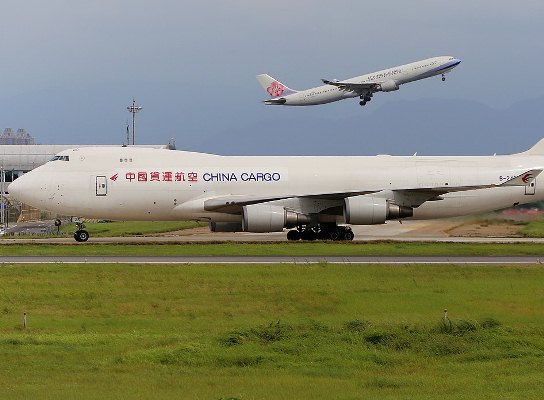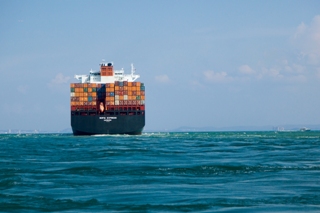

The Philippines’ cargo throughput in the first nine months of the year grew 2.88% year-on-year to 149.55 million metric tons (mmt) from 145.36 mmt, mainly on the back of substantial volume increases at the country’s 16 port management offices (PMO).
PMOs Tagbilaran, Ormoc and San Fernando led the growth, with volumes expanding 44.62%, 40.60% and 26.06%, respectively, data from the Philippine Ports Authority showed.
The growth was driven mainly by increased domestic shipments of aggregates, heavy equipment and construction materials, as well as exports of limestone ore in private ports in Tagbilaran, and more shipments of copra and coco products, and higher import volume of fertilizer raw materials and exports of sulfuric acid and copper at private ports in Ormoc.
Greater coal imports and a sustained rise in the sand exports at private ports in San Fernando also helped drive the volume growth.
Notably, imports had grown 2.35% and exports 1.91% by the end of September.
Of the total throughput, foreign cargoes contributed 92.464 mmt, 3.92% higher than the 88.979 mmt in January-September last year.
Domestic cargoes, on the other hand, accounted for 57.087 mmt, a 1.25% improvement over the 56.384 mmt in the same period last year.
Private ports handled 93.27 mmt or 62.37% of the total volume while government ports accounted for 56.80 mmt or 37.63%.
Among the 24 PMOs, Surigao outperformed everyone with a contribution of 23.59 mmt or 14.79% of the total, surpassing the total volume of the entire port district office of the Visayas or Southern Mindanao.
Surigao also replaced Manila International Container Terminal (MICT) as the best performer in terms of foreign cargo volume nationwide, although the latter is a single port while the former consists of various government-owned and private ports.
Trailing Surigao was PMO Batangas with 16.07 mmt, followed by the North Harbor, which handled 14.38 mmt, and the Port of Limay, with 12.20 mmt.
Containerized cargo volumes also grew 1.6% year-on-year to 3.904 million twenty-foot equivalent units (TEU) from 3.843 million TEUs.
North Harbor remained the top port in handling domestic containerized cargoes with throughput of 673,259 TEUs for the first nine months, while MICT handled the most foreign containerized cargoes totaling 1.33 million TEUs. Trailing them were South Harbor with 701,903 TEUs and Davao with 189,730 TEUs.
Shipcalls increased 3.3% to 268,000 in the first nine months from 259,431 the same period in 2012. Passenger volume grew 5.22% to 39.56 million from 37.592 million a year earlier.–– Roumina M. Pablo