
 The steady improvement of the global economy is putting a positive vibe to the outlook for shipping, as demand goes up and fleet expansion cools off, but regulatory burdens remain major challenges, according to BIMCO.
It cites IMF forecasts of a three-year high of 2014 GDP growth at 3.6 percent and world import volume growth at 4.8 percent for its outlook for the year.
Bur despite key economic regions’ notable fiscal policies aimed at stimulating growth, there is still no full-blown and self-sustainable economic recovery.
For the second quarter of 2013, Europe recorded the first positive GDP growth in 18 months, a healthy contrast to the previous double-dip recession of earlier quarters. However, rising unemployment continues to be a major concern.
With a projected growth in the U.S. GDP of 2.6 percent, the easing program of its Central Bank continues to be the vital ingredient to uphold the country’s positive momentum.
In Asia, the world’s second and third largest economies will help spur solid international shipping demand in 2014. China is on track for a GDP growth at 7.3 percent, while Japan’s “Abenomics” is driving it to boost it monetary base, bringing back inflation and lifting GDP.
Growth in emerging market and developing economies is expected to remain strong at 5.1 percent in 2014, supported by solid domestic demand, recovering exports, and supportive fiscal, monetary, and financial conditions.
While signs are generally positive for all shipping sectors, strong supply is still causing great volatility in freight rates, noted BIMCO.
“A worrying amount of ordering is taking place, adding tonnage to an already excessive world fleet. This will delay a return to a balance between supply and demand and hence the long awaited market recovery,” said BIMCO president John Denholm.
“To add insult to injury, the ever increasing regulatory requirements impose significant costs on our industry at a time when it can ill afford them.”
Fortunately, said BIMCO, the industry now improved its ability to apply counter-balancing measures “to such a degree that even the most oversupplied sectors may experience periodic healthy earnings.”
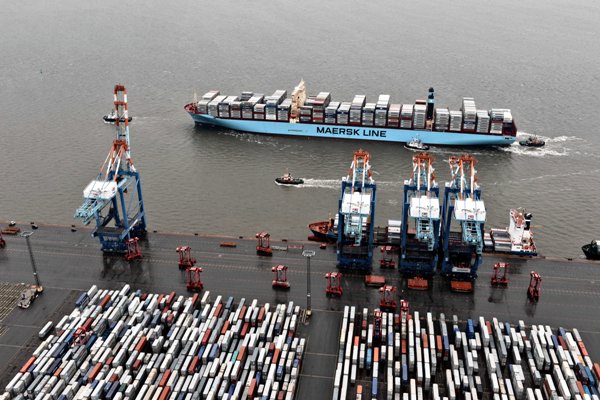
In container shipping, a desire to enhance competitiveness by lowering unit costs through economies of scale is inducing carriers to deploy increasingly large vessels to optimize services, driving volatility in freight rates.
“The two significant spot freight rate hikes on the Shanghai to Europe trade lane during the second half of 2013 proved the point that balancing deployed tonnage to demand can bring sustainable earnings around—at least for a short while,” said BIMCO.
“For 2014, carriers are likely to bring tonnage into service while walking on a knife’s edge trying to balance the freight market.”
Tonnage demand in 2013 turned out to be a bit weaker than initially expected; however, on the supply side the fleet continued to outweigh demand. The year 2014 is likely to see a change for the better, as the pace of deliveries slows down, said BIMCO.
Supply growth in the container ship segment in 2014 is estimated at 5.7 percent against 2013 estimates of 5.9 percent.
The highest demand growth is seen on the smaller trades; the North-South trades in particular. The pulse on intra-Asia trades is beating fastest of all as ASEAN economic activity strengthens and picks up pace.
Photo: Ethan Hein