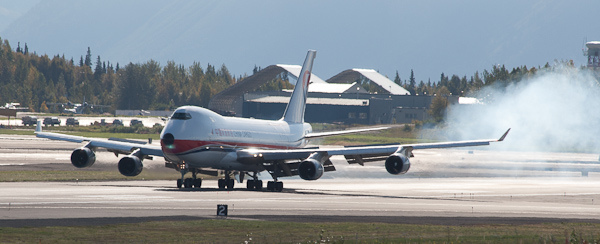
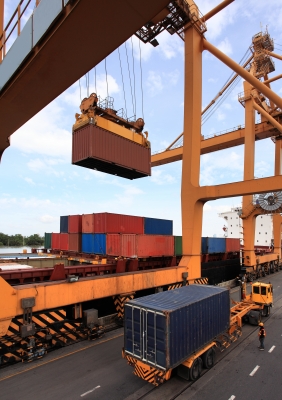
 The air cargo sector has lost almost 2 percentage points of annual growth since 2000 to ocean box carriers, with trade lanes from Asia hit the hardest, according to research by Seabury Group and the International Air Transport Association.
The shift in transport preference among shippers and forwarders is set to continue at a moderate pace, the report said.
Airfreight’s share of total global containerized or unitized cargo transported declined from 3.1 percent in 2000 to 1.7 percent in 2013, with around one-third of the market share loss being due to “modal shift”—in which a product that used to be shipped by air is now shipped instead by sea or surface transport.
“Commodity mix” factors and “value effects” were the other main causes identified by the study.
Raw materials and perishables had been affected the most by modal shift, but fashion, high-tech, and machinery parts shipments had also experienced significant shifts from air to ocean freight.
Shippers interviewed in the survey indicated that the main factors driving modal shift included transportation costs, increased reliability of ocean freight, and the environment.
According to shippers, the air cargo sector could minimize or reverse modal shift by offering cheaper rates, better products, and closer relationships with shippers.
On the other hand, freight forwarders suggested increasing sustainability through fuel efficiency, improving operational reliability, and enhancing electronic communication.
Both shippers and forwarders expected the shift to ocean freight to continue in a moderate fashion in the next few years. By industry, the automotive and electronics sectors were identified as most at risk of the migration trend.
“Mode shift has eroded a significant portion of airfreight growth and is expected to continue to do so, albeit at a moderate rate,” Gert-Jan Jansen, head of Seabury Cargo Advisory, commented. “Annual global airfreight volumes would be 15.2 million tonnes higher if airfreight had retained its 3.1 percent market share, and over the past 13 years, 5.4 million tonnes have shifted from air to ocean—an average annual loss of more than 400,000 tonnes per year.”
Without this modal shift, the compound annual growth rate for airfreight could have reached 4.5 percent from 2000 to 2013, instead of the 2.6 percent actually achieved.
Jansen said airfreight stakeholders need to address the issues raised in the survey if they wish to minimize or reverse their market share losses.
“While shippers would like to focus attention on airfreight rates, there are other aspects at play,” said Jansen. “Forwarders require improvements in terms of fuel efficiency, reliability and use of e-communication, while respondents also highlighted the importance of reduced door-to-door transit times.”
Photo: Frank Kovalchek