The Department of Transportation and Communications (DOTC) is reconsidering the planned construction of a third runway at the Ninoy Aquino International Airport (NAIA) after an airport expert it tasked to assess the project cautioned it might not be feasible.
Transport Secretary Joseph Emilio Abaya said Dutch consultant Ruud Ummels, in his initial briefing, said that “we might not achieve the desired results given the investment and the disturbances that the parallel runway will create.”
Abaya said DOTC is reviewing the initial plan to build a 2.1-kilometer third runway located south of the existing primary runway and within the 400-hectare NAIA complex.
He said the challenge with the proposed design is that the parallel runway would cross the main runway.
“The consultant said that we should protect the main runway, minimize the disturbance and maximize the operations,” Abaya said.
Instead, the transport chief said a new passenger terminal which will be accessible to major roads such as C5 Road and the South Luzon Expressway appears more viable.
“A new passenger terminal building will address air traffic congestion by increasing the number of movements on the runway,” Abaya noted.
He explained: “When you land here, you can exit that way. It will allow passengers to use C5 or South Luzon Expressway to get to NAIA. It will also address (the need for) additional parking space, which is a challenge right now (for the other terminals).”
Furthermore, building a new passenger terminal will not require the relocation of affected residents as the construction of a new runway would.
The proposed terminal will either be named Terminal 5 or be made a replacement for the existing Terminal 4.
However, Abaya clarified there is no final decision yet on whether to junk the third runway option in favor of a new passenger terminal.
“The consultant is still verifying. I have to get the final numbers from him. Hopefully, after he gets back to me, I can present this to the President and then we finalize our direction,” Abaya said.
In September, President Benigno Aquino III gave the go signal for the third runway.
According to the Civil Aviation Authority of the Philippines, airline companies are losing P7 billion annually in additional fuel costs and engine maintenance expenses due the air congestion and flight delays.
The congestion at the country’s main hub is due to the limited capacity of its runway, which can accommodate only 36 events (takeoff or landing) per hour, or one event for every one minute and 40 seconds.
Measures that have been taken to relieve runway congestion include rationalizing domestic flight slotting, allocating P500 million for the upgrade and building of two rapid exit taxiways, and tapping a consultant to study the NAIA runway optimization plan that has a project cost of P91 million.
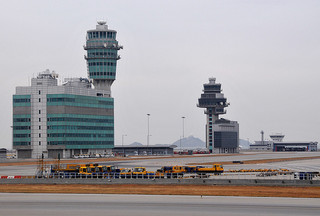
Photo from Manila International Airport Authority website