
 Airfreight traffic sustained its upward trend with a year-over-year growth rate of 4% in November, according to Airports Council International (ACI).
Overall accumulated global volumes for the last 12 months rose by 4.7%. International freight volumes jumped up by 5.6% whereas domestic volumes increased by 2.6%.
On regional levels, Asia-Pacific airports posted increases in volumes of 4.7% in November, which are slightly below the 12-month growth trend of 5.6%. Nevertheless, the region’s largest freight hubs continue to report gains in volumes. Hong Kong, Shanghai, and Incheon saw volumes increase by 5.5%, 8%, and 3.6% respectively, for the month.
The Middle East continues to achieve the highest growth in freight volumes at 12.8% year-over-year in November. Since the launch of Dubai World Central (DWC), the airport has remained one of the major contributors to overall increases in freight volumes for the region. Airfreight volumes at DWC have increased by over 301.9% as compared to the previous year.
North America experienced moderate growth of 2.2%. Memphis, North America’s busiest freight airport and FedEx hub, and Louisville, the UPS hub, were almost flat in year-over-year growth. Anchorage posted a gain of 2.4% in freight volumes.
Europe experienced more moderate growth of 3.1% year-over-year. However, results were mixed across airports in the region. Frankfurt grew by 2.7% while Paris had a decline of 1.8%. Istanbul achieved one of the highest gains in freight volumes for the region at 14.3% year-over-year.
With ongoing weakness in the Brazilian and Argentinian economies, freight volumes in Latin-America-Caribbean were flat for November as compared to the previous year. Nevertheless, the busiest airports of Sao Paulo and Mexico City posted gains of 4.2% and 10.7%, respectively.
Africa is experiencing some volatility in month-to-month freight volumes. While October freight volumes achieved significant gains over the previous year, November volumes were in decline by 1.7%.
Despite the upturn in cargo traffic, ACI world’s economics director Rafael Echevarne forecasts downside risks on the horizon for the industry in general going into 2015, noting “two forces at play working in opposite directions.”
One of these risks is the divergence in economic growth rates among certain emerging markets. Of the BRICS (Brazil, Russia, India, China, South Africa) economies, India and China are maintaining favorable growth while Brazil and Russia are experiencing a slowdown. The Euro area continues to teeter towards a recession.
“On the other hand, the recent decrease in oil prices and improvements in the American economy are likely to contribute positively to the continued increases in passenger numbers,” said Echevarne. “Moreover, the boosting of world trade volumes in the latter half of 2014 has had a positive impact on the air freight market.”
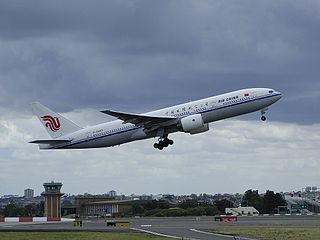
Photo: Grahame Hutchison