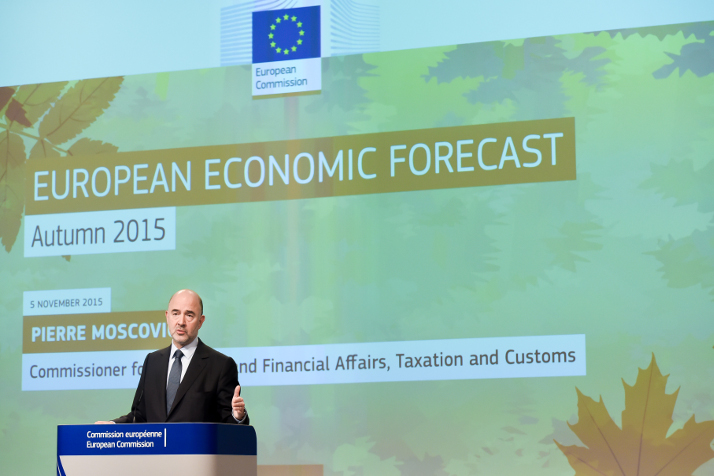
 The European Commission forecasts that economic recovery for the European Union will continue at a “modest pace,” both in the 19-country eurozone and across the continent.
“The economic recovery in the euro area and the European Union as a whole is now in its third year. It should continue at a modest pace next year despite more challenging conditions in the global economy,” said the commission in an official statement.
Euro area real gross domestic product (GDP) is forecast to grow by 1.6% in 2015, rising to 1.8% in 2016 and 1.9% in 2017, said the commission in its economic forecast released November 5.
In the wider EU, real GDP is also predicted to rise from 1.9% this year to 2% in 2016 and 2.1% in 2017.
Valdis Dombrovskis, vice-president for the euro and social dialogue, said, “Today’s economic forecast shows the euro area economy continuing its moderate recovery. Growth is largely backed by temporary factors such as low oil prices, a weaker euro exchange rate and the ECB’s accommodative monetary policy. The euro area has shown resilience to external developments, such as the slowdown in world trade, and this is encouraging.”
“The European economy remains on recovery course,” said EU Commissioner Pierre Moscovici, adding that the recovery “although subdued compared to past experiences,” has so far proven resilient.
In the first half of this year, the continent’s GDP grew slightly faster than expected, thanks to low oil prices, a relatively low euro exchange rate, and easy financing conditions, said the forecast.
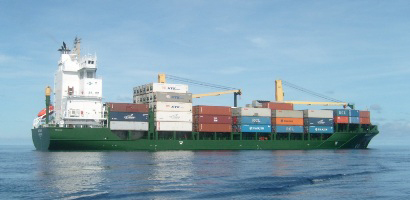
But the outlook for global growth and world trade has deteriorated considerably since the spring, due to the downturn in emerging market economies, particularly China, the commission added. Emerging market economies are expected to reach their trough this year and to start recovering in 2016.
So far, euro area exports have largely been spared from the deterioration in global trade, mainly thanks to the euro’s past depreciation. However, export growth is expected to slow down in 2016 before rising slightly in 2017.
Looking ahead, the EU said its economic growth, although slow, will be backed by factors such as better employment performance, easier credit conditions, progress in financial deleveraging, and higher investment.
However, it also cautioned that the region’s recovery is set to face some new challenges posed by the slowdown in emerging market economies and global trade, and persisting geopolitical tensions.
“Risks related to the global economic outlook have increased. Lower growth in emerging market, the effects of expected normalization of U.S. monetary policy on emerging markets, could have a more negative impact on investment and economic activity in Europe than currently expected,” the forecast said.