 The Indonesian government has identified several special economic zones (SEZs) targeted for development under its latest economic policy package that it announced last week, aimed at reinvigorating the rural areas.
“Based on this package, the government has designated eight areas as Special Economic Zones (SEZs) to develop local resources,” Chief Economic Minister Darmin Nasution said at a press conference held late last week.
These eight SEZs are Tanjung Lesung in Banten, Sei Mangkei in North Sumatera, Palu in Central Sulawesi, Bitung in North Sulawesi, Mandalika in West Nusa Tenggara, Morotai in North Maluku, Tanjung Api-Api in South Sumatra, and Maloi Batuta Trans Kalimantan in East Kalimantan.
Darmin said the new policy is expected to attract investors by making it easier to do business in the SEZs and by offering various incentives.
The policy also encourages the integration of efforts by the regional and central governments to create a good investment climate, said a report by Antara News.
The draft government regulation will provide for the type and amount of fiscal incentives to be given as well as the various other facilities in the manpower sector, immigration, land, and licensing services to be put up. It will also hand out bigger incentives for those capitalists that plan to make investments in the production chain in the SEZs.
The sixth economic policy package will likewise simplify licensing procedures under the Food and Drug Supervisory Board to ensure food and drug prices are affordable and to spur the production and export of food and drug products.
The latest economic stimulus package follows the first five announced successively by the government since September. The fifth one, unveiled last month, is focused on covering deregulation of permits at the regional level, while the fourth, also issued earlier that same month, promotes a simpler wage system, and the expansion in the number of small exporters that can avail themselves of smallholder credit and credit extension to prevent layoffs.
The third economic policy package, likewise pronounced in October, covers the reduction in the price of fuel oils, electricity and gas; expansion in the amount of micro loans to enterprises; and simplification of land permit issuance to attract investments.
Meanwhile the first and second packages, declared in September 2015, aim to increase deregulation efforts to improve the investment climate in the country and facilitate development projects.
The economic policy packages are being issued by the government in a series with the goal of overcoming the country’s growth slowdown following global economic uncertainty while attempting to make Indonesia more competitive.
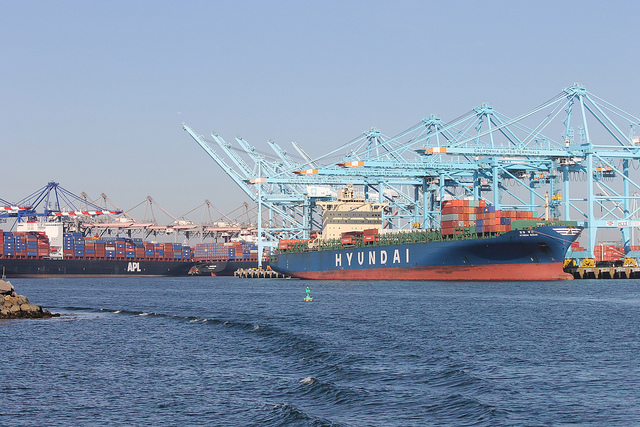
Photo: toffeespin from Singapore, Singapore