
 The Trans-Pacific Partnership (TPP) agreement will have a positive effect on Vietnam, providing the country unique and comparative advantages such as fewer tariffs, export growth, and economic expansion, according to the World Bank.
In a new analysis, World Bank said that when the TPP comes into effect, it is expected to generate considerable benefits for Vietnam, the country with the lowest per capita gross domestic product (GDP) among the 12 signatories.
On the economic impact, the TPP could add as much as 8% to Vietnam’s GDP, 17% to its real exports, and 12% to its capital stock over the next 20 years, said a report by VGP News, Vietnam’s state-run news agency.
Simulations suggest that the TPP would spur Vietnam’s real GDP to over 8% by 2030, thanks to fewer tariffs on its exports, especially on garments and textiles, the study said.
The TPP also presents an opportunity for Vietnam to penetrate more export markets. As almost all tariffs and non-tariffs on industrial and agricultural products will be eliminated or gradually reduced, both export and import activities of Vietnam will get a boost.
The TPP will likewise diversify Vietnam’s exports, helping the Southeast Asian country move further away from exporting raw materials to shipping out more manufactured products.
The World Bank estimates that the export of manufactured products, which accounts for around 58% of total export turnover, will rise by an additional 30%, while other sectors like agriculture, petroleum, mining, and services will experience slight decreases.
In addition, the financial institution projects that the TPP will help Vietnam integrate deeply into the global supply chain, create conditions for economic restructuring, encourage investment, and nurture a more competitive and creative economy.
However, the global lender also forecasts that in the short term, Vietnam would not yet be able to leverage on the opportunities emanating from the TPP.
Vietnam relies heavily on imported raw materials for garment and textile production, importing around 60% to 90% of fiber requirements from China and Taiwan. This means a large proportion of Vietnamese exports will not meet TPP’s requirements on rules of origin. The World Bank said the nation can overcome this hurdle by restructuring domestic enterprises; developing auxiliary industries; and controlling pollution with modern technologies.
The agreement to create the TPP was signed on October 5 this year. The partnership is a landmark agreement that will eliminate or reduce tariffs, lower the cost of trade, and set new standards for global trade among the participating countries.
Aside from Vietnam, other signatories to the deal are Australia, Brunei Darussalam, Canada, Chile, Japan, Malaysia, Mexico, New Zealand, Peru, Singapore, and the U.S. Together, the member countries have a combined population of 800 million and are projected to account for 40% of the world’s GDP and 30% of world trade.
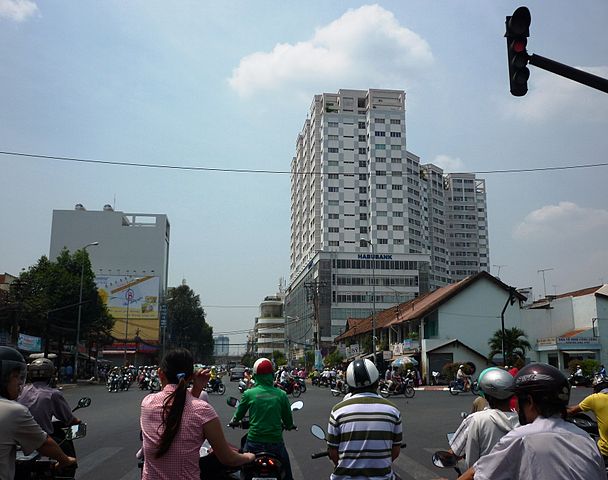
Photo: Ngô Trung