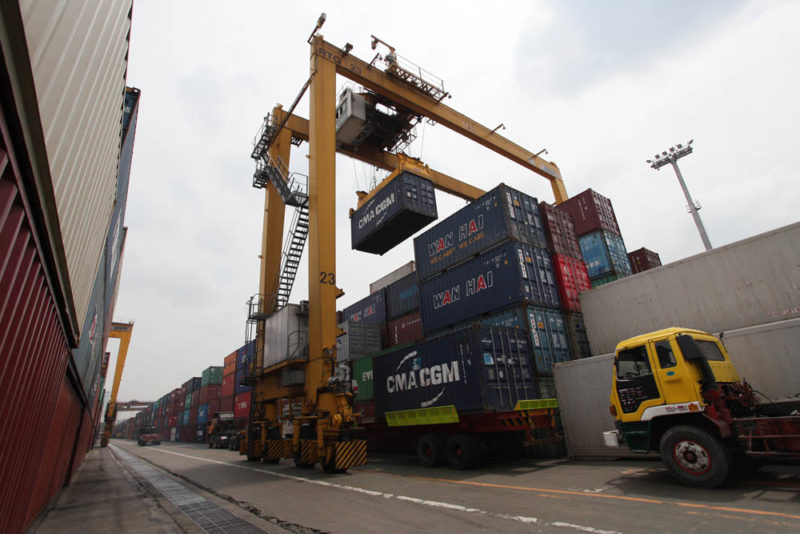


Since implementing the Terminal Appointment Booking System (TABS) in October last year, truck transactions at the Manila South Harbor have increased, achieving a quicker turnaround time, reported port operator Asian Terminals Inc. (ATI).
In a statement, ATI said that from processing around 800 trucks on a 12-hour shift prior to the launch of TABS, Manila South Harbor now services over 1,000 trucks on average during the same period, reflecting a more than 20% increase in production.
TABS—an online platform that manages truck movements in and out of Manila’s two international terminals—works like an airline booking system, in which customs brokers schedule the pickup and delivery of containers at Manila ports. Booking is done by selecting time slots across the 24/7 week period. Since sufficient slots are available, brokers can rationally plan deliveries once port fees and Customs duties are settled, ATI explained.
“Further, since the system is automated and online, it is free from any form of human intervention, promoting greater transparency and streamlined processes for the industry,” the port operator said.
Once a booking is confirmed, a broker’s truck simply has to show up at the terminal on schedule and is immediately served. ATI said the orderly arrival of trucks spread throughout the day avoids bottlenecks at the port gates and eases traffic flow along major roads.
Since transactions are pre-advised, the port operator can adequately deploy resources that match actual demand, ATI noted. This allows pre-positioning of containers for faster container pickup, as against the old practice of digging up a box from a five-high stack upon the truck’s arrival.
Improved truck service time
ATI said that even with the higher transactions, truck service time has improved, consistent with the envisioned goal of TABS. Faster turnaround time gives truckers more opportunities to do multiple trips per day. Of the more than 113,000 South Harbor-bound trucks from October to January, 89% were served within 15 minutes to less than an hour of gate entry, ATI said.
“Following the successful pilot run of TABS, an enhanced system will be implemented by mid-March, including truck ban exemption and truck access along Roxas Boulevard, as approved by the Metro Manila Council and as earlier announced by Cabinet Secretary Jose Almendras,” it added.
This improved system will cover TABS-registered trucks and those with valid terminal booking. Valid bookings may easily be verified via a short message system (SMS) by dialing 292908120 from any mobile phone.
Government-mandated penalties will also be in place to safeguard against system abuse and misuse, ATI said.
In another development, ATI said South Harbor set a new operations record this February as production averaged an all-time high of 30 container moves per crane per hour. This production level is world-class and comparable to those of global trade giants Singapore and Hong Kong, ATI noted. Production is measured by how many containers a crane moves from ship to shore per hour.