
 The Confederation of Truckers Association of the Philippines (CTAP) will ask the government to revise the implementing rules and regulations (IRR) of the Anti-Overloading Act so truckers can meet the law’s provisions.
In a media briefing on July 13, CTAP officers said the IRR of Republic Act (R.A.) No. 8794 needs amending to increase the allowable maximum gross vehicle weight (GVW) for truck codes 12-2 and 12-3 so truckers can comply with the law.
The IRR of R.A. 8794, otherwise known as An Act Imposing a Motor Vehicle User’s Charge on Owners of All Types of Motor Vehicle and for Other Purposes, was revised by the Department of Public Works and Highways (DPWH) in 2012.
But since 2013, the enforcement of the law for truck codes 12-2 and 12-3 has been continuously suspended by DPWH and the Department of Transportation (DOTr) to give truckers time to acquire needed equipment.
The latest suspension has been extended until December 31, 2016. DPWH said that “by January 1, 2017, all trucks/trailers must be fully-compliant with Codes 12-2 and 12-3 to have maximum allowable GVW of 41,500 and 42,000 kilograms respectively.”
CTAP director Ruperto Bayocot said that even if the DPWH and DOTr keep suspending the enforcement for years, truckers will still not be able to comply.
He said 80% to 90% of trucks servicing the ports fall under codes 12-2 and 12-3. Code 12-2 trucks are semi-trailers with three axles on the towing trucks and two axles on the trailers, while the 12-3 configuration are semi-trailers with three axles on the towing trucks and three axles on the trailer.
Bayocot said they have been requesting DPWH to increase the maximum allowable GVW for code 12-2 to 52,000 kilograms from the IRR’s 41,500 kg, and for code 12-3 to 57,000 kg from 42,000 kg.
Bayocot noted these suggested weights were equivalent to the 13.5 tons of allowable weight per axle, which is in keeping with the law. Only North Luzon Expressway implements the per-axle basis of weighing while other areas implement the GVW. The moratorium suspends the GVW enforcement only for the two truck codes.
Inland Haulers and Truckers Association president Teodorico Gervacio earlier agreed that increasing the allowed GVW was the only solution; otherwise, importers would be forced to lessen their cargoes in order to comply.
CTAP vice president for external affairs Pepito Dino also pointed out that trucks apprehended for overloading are only fined then allowed to continue to ply the roads, defeating the purpose of the law of preventing severe damage to the country’s roads from the weight of overloaded vehicles. – Roumina Pablo
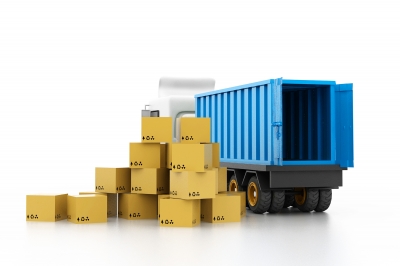
Image courtesy of hywards at FreeDigitalPhotos.net