 The COP23 host country Fiji launched recently the Ocean Pathway Partnership toward formal recognition of the links between ocean and climate change in the United Nations Framework Convention on Climate Change (UNFCCC) process by 2020.
Two years after the signing of the Paris Agreement, the first international climate agreement to recognize the essential role of the ocean as chief climate regulator, the ocean continues to make headway to the center stage of global climate politics. Mounting challenges such as increasing CO2 and decrease in oxygen levels nevertheless pose grave threats to ocean health and, in turn, human well-being.
The new partnership, launched November 16 at the UN COP23 in Bonn, Germany, seeks to encourage the climate negotiations process to address the relationship between climate change and the ocean.
The partnership will also consolidate existing work being done to create a coordinated effort among governments at all levels, ocean alliances and coalitions, civil society, and the private sector to create a stronger link between climate action and a healthy ocean.
Other initiatives under the new endeavor include efforts to raise funding in support of ocean health and the maintenance of critical ocean ecosystems.
The project also wants to ensure the insertion of ocean-based action into countries’ Nationally Determined Contributions to the Paris Agreement.
It also seeks to support existing priorities that affect ocean and climate including sustainable transport, cities and human settlements, population displacement and migration, coastal infrastructure, marine ecosystem services, ocean food security, and ocean energy.
The movement likewise aims to strengthen mobilization and cooperation of the parties to conserve and enhance the resilience of ocean under the UNFCCC.
The UN secretary general’s special envoy for the ocean, Peter Thomson, said that just as there is climate action, so too must there be ocean action. “Everyone has a role to play in ocean action,” he said.
The partnership will be co-chaired by Fiji and Sweden, which are joining forces again after leading the inaugural UN Ocean Conference in July.
It was launched with the support of a number of countries, including Chile, Cook Islands, Dominican Republic, French Polynesia, Portugal, Kiribati, Marshall Islands, Mexico, New Zealand, Norway, Palau, Samoa, and the Seychelles. A number of multilateral organizations and NGOs also pledged their support.
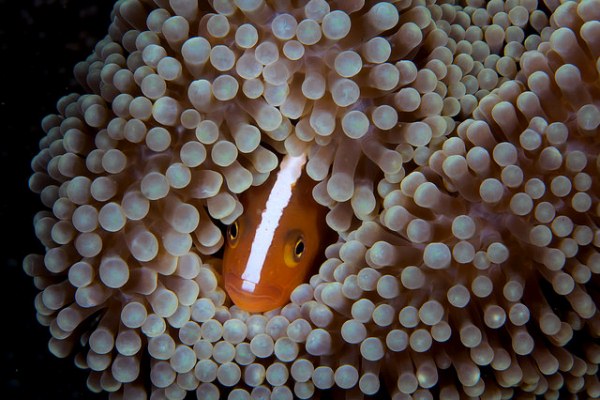
Photo: Betty x1138