 Singapore’s Changi Airport Group (CAG) has announced that it will increase by July airport fees for both passengers and airlines to help fund part of the Changi East development as well as the upgrading and refurbishment of existing terminal infrastructure and security facilities.
The announcement came the same day the government said February 28 it will introduce from July 1, 2018 a new airport development levy (ADL) for passengers departing Changi Airport, also to help fund airport developments.
CAG in a statement said the passenger service and security fee (PSSF) for all origin/destination passengers departing from Singapore Changi Airport, presently SGD27.90 (US$21.13), will increase by SGD2.50 per annum from July 2018.
There will be no change in the PSSF levied on transfer/transit passengers, who now pay SGD6.00 when departing from Changi Airport.
In the first year, the new PSSF of SGD30.40 will apply to all air tickets issued from July 1, 2018, for travel until March 31, 2019.
Subsequently, the PSSF will be adjusted annually on April 1 by SGD2.50 over the next six years, with the last increase on April 1, 2024. This year marks the mid-point of the estimated construction phase of the Changi East project.
Any subsequent adjustments will be announced only after a review, said CAG.
Increase in LPA fees
Besides the adjustment to the PSSF, also increasing by 1% on July 1, 2018 are the landing, parking and aerobridge (LPA) fees, applicable to all flights at Changi Airport.
The LPA fees will then increase by 1% annually on April 1 for the next six years, with the last increase on April 1, 2024, when a review will be conducted.
The expansion of Changi Airport is needed to provide for future capacity and to minimize congestion in its existing terminals, said CAG.
Changi Airport registered 62.2 million passengers passing through its terminals in 2017, a record for the airport. Passenger traffic is expected to continue to grow, with demand for air travel in the Asia-Pacific region projected to triple over the next two decades. Passenger traffic at Changi Airport is forecast to grow at about 3% to 4% per annum over the next 20 years.
Based on projections, Changi Airport’s handling capacity of 85 million passengers per annum is expected to be fully utilized by the late 2020s. Without further expansion, service standards may drop, with passengers experiencing delays.
“With Changi East, there is opportunity to capture a share of the growth in air travel in the region, to secure Singapore’s air hub status and ensure its continued competitiveness and relevance,” said CAG.
Funding for Changi East will come from three parties—the Singapore government, CAG, and airport users (including airlines and passengers). The increases in the aeronautical fees will also contribute to the upgrading and refurbishment of existing terminal infrastructure.
Development works taking place at Changi Airport between now and 2024 include upgrading of the Skytrain system and the baggage handling system, as well as a revamp of Terminal 2.
These improvements will alleviate congestion during peak hours and improve the airport experience for passengers.
This period will also see the operationalization of Changi Airport’s three-runway system that will reduce congestion in the airside, allowing for more flight movements in a safe and efficient manner.
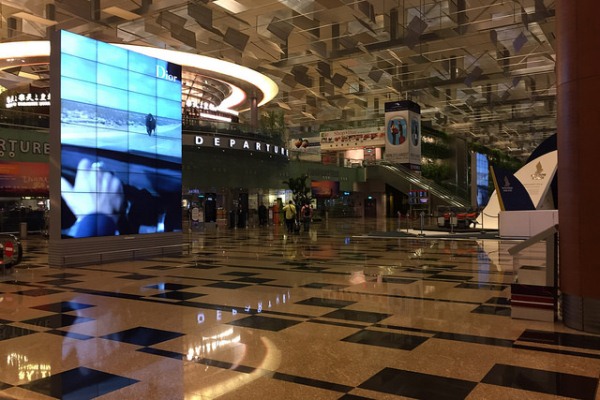
Photo: eugene_o