 Shippers should use logistics providers with strong relationships to shipping lines, or they could find their shipments left on the quay side, says global freight forwarder SBS Worldwide.
The warning comes as shipping lines have been withdrawing capacity because of an oversupply of vessels on key trade lanes.
“When shipping lines remove services in order to balance supply and demand, it results in a short term reduction in capacity,” said Steve Walker, chairman of UK-based SBS Worldwide.
“When this occurs, shipping lines will leave containers behind—it tends to be those being transported on behalf of shippers with short-term supply and demand driven carrier relationships that suffer this fate.”
He advised that, to avoid such situations, shippers should make sure that their logistics provider has strong, long-term relationships with more than one reliable shipping line on any trade lanes where they require transport services.
Walker added that there are already reports of some cargo being left behind as the result of a mini surge in cargo from China, as companies attempt to export ahead of the closure of factories for the Chinese New Year celebrations.
The service withdrawals come as carriers have had a tough year. Record profits in 2010 turned to losses in 2011 because of overcapacity in the market.
To reverse the oversupply situation, carriers have been busy removing services and laying up vessels.
According to shipping line analyst Alphaliner, the number of vessels taken out of service—an indication of how many ships have been temporarily withdrawn from service—at the start of December 2011 was 19.8 percent higher than the start of November.
The shipping industry was struck by a major capacity shortage in late 2009/early 2010, when shipping lines removed a glut of capacity—to correct an oversupply situation—at the same time as an unexpected boom in business.
The volatile mix resulted in months of delays to containers as shipping lines were unable to provide enough space on ships.
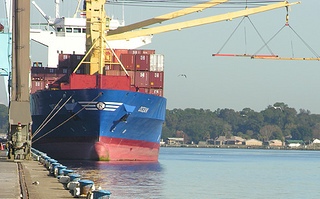
Photo by JAXPORT