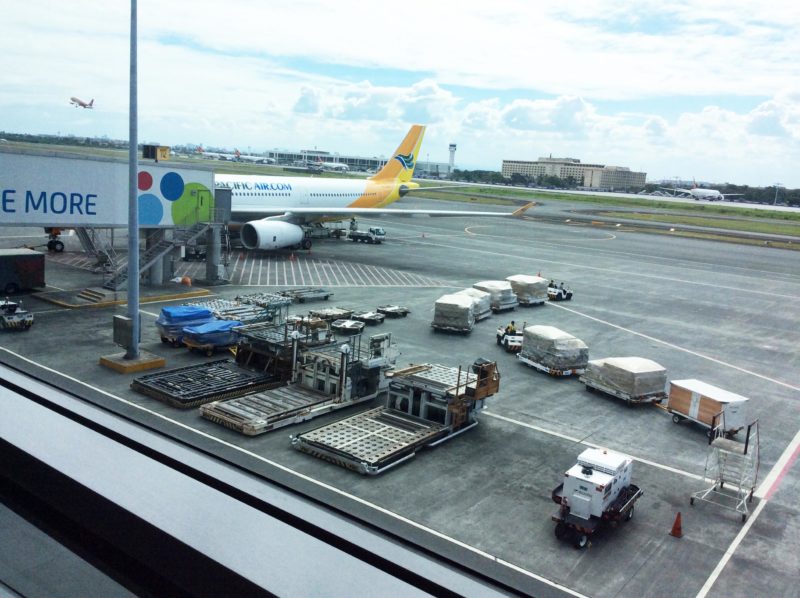

 Due to the recent spate of flight cancellations by Cebu Pacific, the Civil Aeronautics Board (CAB) has ordered the low-cost carrier to submit within 30 days a concrete plan detailing corrective measures in its operations to prevent inconvenience to passengers.
The order follows a report submitted by CAB to the Department of Transportation (DOTr) after conducting two formal hearings asking Cebu Pacific to explain the circumstances behind the carrier’s flight cancellations, especially those from April 28 to May 10.
CAB likewise prescribed giving a stern warning to Cebu Pacific that it should exercise diligence necessary in maintaining stability and reliability of air transport service to the riding public.
Cebu Pacific applied for cancellation of 172 one-way domestic flights from April 28 to May 10, equivalent to about 14 flights a day, out of its more or less 400 daily domestic flights.
Transportation Secretary Arthur Tugade emphasized that formulating a concrete plan will help the whole airline sector to address similar issues that might occur in the future.
In the investigation held last May 2 and May 6, Cebu Pacific said that ongoing efforts to improve on-time performance (OTP) led to its decision to cancel hundreds of flights.
For the DOTr’s part, Secretary Arthur Tugade directed the daily publication of airline OTP in major airports nationwide.
During the hearings, Cebu Pacific cited the reasons for the downturn in its on-time performance. It explained that it could take as long as 66 minutes from the aircraft’s closing of doors to actual lift-off: 19.6 minutes spent from closing of doors to the “blocks off” or the time the aircraft vacates the parking position; and 46.6 minutes from the blocks off to lift-off. Meanwhile, the shortest time between closing of doors and actual lift-off was 49 minutes.
The hour-long stay on the tarmac was observed to have pushed Cebu Pacific’s OTP to an average of 51.16%, with lows of around 30% in March.
This record, Cebu Pacific said, prompted it to finally decide to cancel flights. It said the flight cancellations would “create space” in their flight and crew inventory, “make way for operational recovery,” and “minimize rolling delays.”
DOTr said the airline made clear that the factors adversely affecting its OTP were largely within its internal operational sphere.
To further analyze the circumstances, CAB scrutinized several areas such as airline assets and crew.
In terms of assets, CAB found Cebu Pacific to be adequately equipped. The airline even has one of the younger fleets among Philippine carriers. Additionally, Cebu Pacific is set to receive three more new aircraft in the future.
For its crew, CAB questioned Cebu Pacific on its compliance with the regulations of the Civil Aviation Authority of the Philippines, to which the airline responded affirmatively.
The aeronautics board was convinced with the scenario given that the additional time spent by on-duty crew on the tarmac consumed the working hours and reserves that were supposed to be utilized at a much later schedule. Hence, in this sense, CAB found Cebu Pacific to have a “crewing problem.”
Meanwhile, affected passengers’ concerns were found to have been handled properly by Cebu Pacific, in compliance with the Air Passenger Bill of Rights, so imposing penalties was not considered at present.
While CAB understands the cancellations as a recuperative measure for the airline, CAB executive director Carmelo Arcilla pointed out that it cannot be made at the expense of the riding public.
“We want to remind airlines to consider the welfare of its passengers by avoiding short notice. The people have paid for these flights and have made their schedules accordingly. While we understand the corrective measures being made to improve OTP, maximum effort should be done so that these measures are not at the expense of our passengers,” Arcilla said.