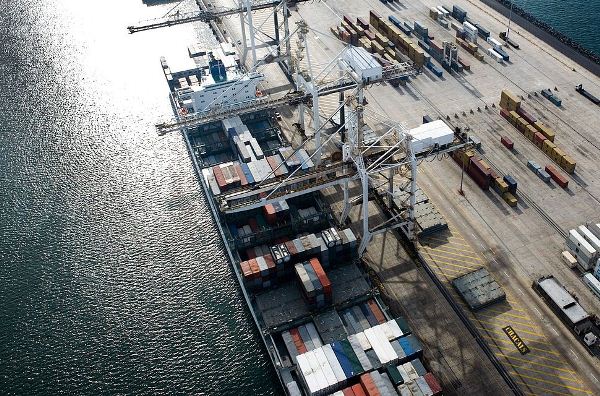

 Ningbo Zhoushan port, China’s busiest port, saw cargo throughput rise 5.5% year-on-year to 557.96 million tonnes in the first half of 2019.
Meanwhile, container throughput at the port in eastern China’s Zhejiang Province reached 13.91 million standard containers in the January-June period, up 4.7% year-on-year, according to statistics from the Ministry of Transport.
The port’s cargo throughput ranked first in the country while its container throughput ranked second only after the Shanghai port.
The Ningbo Zhoushan Port Group, operator of the port, said the port has been accelerating smart port construction to improve efficiency and tapping the inland market to boost business this year when facing unstable economic and trade conditions, reported Xinhua News.
With the help of rail-sea transit services, the port’s business covers 48 prefecture-level cities in 15 provincial regions. In the six-month period covered, the rail-sea transit services handled 386,000 standard containers, up 46.7% year-on-year.
The port has embraced the Belt and Road Initiative by optimizing shipping routes to related regions. The Belt and Road regions contributed to over 40% of its container throughput, with the container throughput from Southeast Asia and the Mediterranean routes in the first half rising 41% and 15.8%, respectively, said the report.
In 2018, the Ningbo Zhoushan Port, a major port that links the Yangtze River Economic Belt with the 21st Century Maritime Silk Road, handled over 1 billion tonnes of cargo for a second straight year, becoming the only one in the world to exceed the 1 billion tonne level.
In addition, its annual container throughput exceeded 26 million standard containers last year, ranking among the top three ports in the world.
Photo: Delgoff