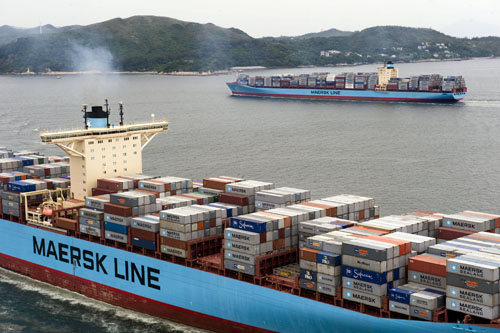
Maersk Line will switch to low-sulfur fuel while at berth for all of its containerships calling the Port of Virginia starting in February. This fuel switch program will help improve air quality in the greater Hampton Roads area by significantly reducing emissions of sulfur and nitrogen oxides and particulate matter.
Maersk Line is the lead shipping line to participate in the fuel switch program sponsored by the Commonwealth of Virginia through the Virginia Port Authority (VPA) and the Virginia Department of Environmental Quality (VDEQ), as well as the U.S. Department of Transportation.
“The Port of Virginia fuel switch is the first such initiative in the Mid-Atlantic and Southeast, and its implementation will create immediate benefits to the region by reducing emissions and improving air quality,” said Virginia Governor Bob McDonnell. “The partnership with Maersk Line represents a model that applies environmentally-conscious business practices while keeping our region’s economy moving forward.”
The fuel switch program will run for thirteen months and involve 41 Maersk Line ships making over 210 port calls. While at berth for the loading and discharge of cargo, Maersk Line vessels will be powered by auxiliary engines running on low-sulfur marine gas oil (MGO). Low-sulfur MGO contains 90-95% less sulfur than typical marine fuel, which will reduce emissions of sulfur oxides (SOx) by an estimated 20 metric tons in the first six months of the program. Over the same period, emissions of particulate matter are expected to decline by 86% or 1.4 metric tons, and nitrogen oxides by 6% or approximately 0.15 metric tons.
Norfolk-based Maersk Line, Limited will have 18 ships participating in the program. As the owner and operator of U.S. flag vessels within the Maersk Group, Maersk Line, Limited will account for 53% of the port calls.
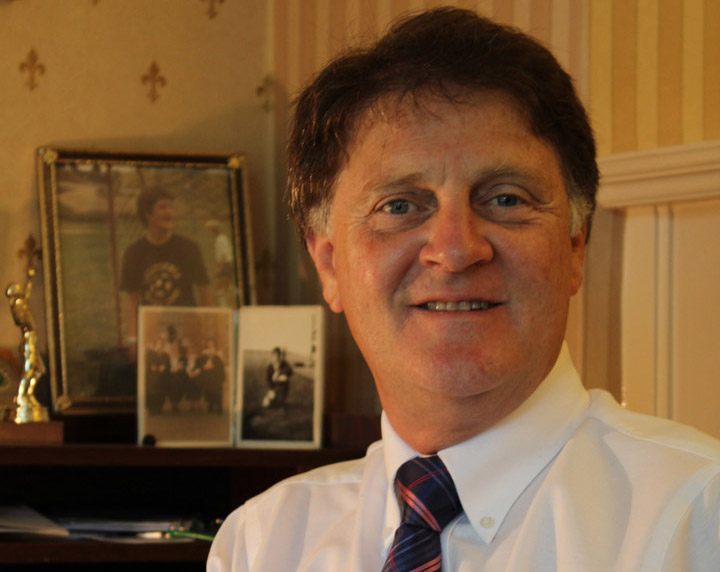
“We are pleased to participate in an effort that will improve air quality in our hometown,” said John Reinhart, president and chief executive officer at Maersk Line, Limited. “The collaboration with VPA and VDEQ enabled the rapid startup of a program that will provide real environmental and health benefits to our community.”
Since 2006, Maersk Line has implemented similar projects in Texas, California, and the Pacific Northwest to reduce emissions by switching to low-sulfur fuel. The Port of Virginia fuel switch represents the latest step toward more sustainable ocean transportation as part of Maersk Line’s “Drive to Zero SOx” program, and it is one of two fuel switch initiatives being implemented this month. The other is in Gothenburg, Sweden.
“Maersk Line is committed to leadership in environmental performance,” said Al Gebhardt, head of Maersk Line’s North American liner operations. “We are very excited about the positive impact of this program, and appreciate the partnership with the Virginia Port Authority and others who made it possible.”