
 The International Maritime Organization (IMO) and the Food and Agriculture Organization (FAO) have launched a new global project to prevent and reduce marine plastic litter from shipping and fisheries.
Launched December 5, the GloLitter Partnerships Project aims to help shipping and fisheries move to a low-plastics future. GloLitter will assist developing countries in preventing and reducing marine litter from within the maritime transport and fisheries sectors, and in decreasing the use of plastics in these industries through reusing and recycling.
Ten countries, from five high-priority regions—Asia, Africa, Caribbean, Latin America and Pacific—will be selected to spearhead the project. At country level, GloLitter will expand government and port management capacities and instigate legal, policy and institutional reforms. Regional cooperation will also be enhanced.
The project will consider the availability and adequacy of port reception facilities; enhance awareness of the marine plastics issue within the shipping and fisheries sectors; and encourage marking of fishing gear so it can be traced back to its owner if discarded.
The GloLitter project will develop guidance documents, training material and toolkits to help enforce existing regulations, including IMO’s International Convention for the Prevention of Pollution from Ships (MARPOL) Annex V. Since 1988, this has prohibited the discharge of plastics, including discarded fishing gear, into the sea from ships.
The project will also promote compliance with relevant FAO instruments (including the Voluntary Guidelines on the Marking of Fishing Gear) and will target waste management in ports.
It will, additionally, emphasize implementation and enforcement of IMO’s London Convention/London Protocol regime on dumping of wastes at sea, which requires waste (such as from dredging) to be assessed before permits to dump are granted.
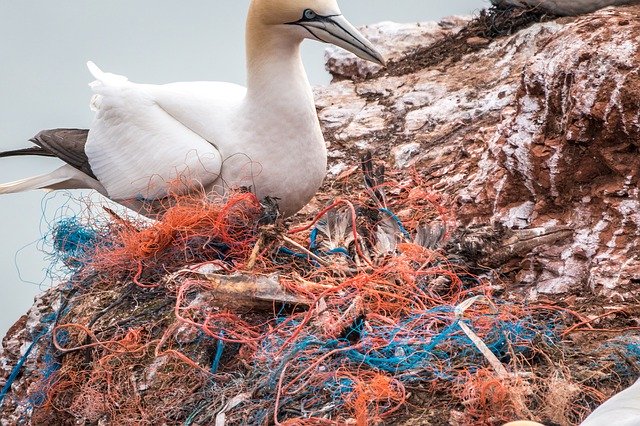
“Plastic litter in the oceans is harming fish, marine mammals and seabirds and threatening the entire marine ecosystem,” said Kitack Lim, secretary-general of IMO.
“This global project will further strengthen efforts within the fishing and maritime transport sectors to pilot, demonstrate and test best practices to deal with marine plastic litter.”
Matthew Camilleri, head of FAO’s Fishing Operations and Technology Branch, said the project will enhance technical assistance to developing countries and increase their capacity to develop strategies for reducing marine litter from fishing operations, and to implement the Voluntary Guidelines on the Marking of Fishing Gear.
“The fisheries sector has an important role in reducing pollution of the marine environment by plastic litter, particularly from abandoned, lost or otherwise discarded fishing gear, and should seek to develop fishing port facilities and schemes for sustainable waste processing, recycling and re-use of materials which contribute to marine litter,” Camilleri said.
The GloLitter project will include private sector participation through a global industry alliance and is seeking partners from major maritime and fisheries companies. It will initially be funded by the government of Norway.
Image by A_Different_Perspective