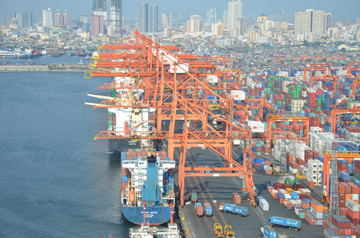
 Manila-based International Container Terminal Services, Inc (ICTSI) reiterated the need to raise port tariffs to help improve the country’s competitiveness, particularly in terms of port services.
The publicly listed company is seeking a 21% hike in cargo-related charges for international containerized and non-containerized cargo for implementation at the Manila International Container Terminal (MICT) starting June 1.
Asian Terminals, Inc, another publicly listed company, is similarly requesting for the same rate hike for the South Harbor.
MICT vice president and general manager Christian R. Gonzales in a letter to Philippine Ports Authority (PPA) port district manager Engr. Constante T. Fariñas Jr. said ICTSI is open to a two-tranch increase — the second tranche to be implemented six months after the first — to lessen the impact of the adjustment.
Stakeholders’ reaction
The letter came in response to position papers submitted by major stakeholder-groups on the proposed increase, including the Association of International Shipping Lines (AISL), Chamber of Customs Brokers, Inc. (CCBI), Export Development Council (EDC), Philippine Exporters Confederation, Inc. (PHILEXPORT), Port Users Confederation of the Philippines, Inc.(PUC) and the Supply Chain Management Association of the Philippines, Inc. (SCMAP). The stakeholder positions were submitted in response to a public hearing conducted by the PPA in March.
CCBI and PUC agreed to a 16% and 15% increase respectively, to be distributed in two tranches so as “not to cause too much burden on stakeholders and end consumers.”
On the other hand, AISL said some of its member lines handling domestic transhipments under a through bill of lading arrangement will be affected by the upward adjustment.
ICTSI countered that “domestic transhipments under this arrangement represent only 0.35% of total TEUs being handled at MICT which is negligible, if not minimal.” It added, “AISL will not be directly affected by the hike, as these charges are not billed to their member lines.”
EDC and PHILEXPORT opposed the increase because of the additional burden it will inflict on small and medium enterprise exporters who are already struggling from economic difficulties in major export markets, a strong peso and the high cost of doing business in the country, particularly shipping costs.
ICTSI’s response distinguished between two different tariffs being charged in the port, each related to completely different services. These are stevedoring which is charged to shipping lines, and arrastre charged to importers and exporters, with each service requiring totally different investments.
Terminal operators, ICTSI explained, are given the opportunity to increase tariffs per category every two years subject to PPA approval. These adjustments are based on increasing costs associated with each of the service, primarily fuel, power, labor and other direct expenses.
ICTSI pointed out that the previous increase in stevedoring fees was granted after more than three years from the last increase. The current application for arrastre tariff was likewise made three years from the last hike.
Photo courtesy of ICTSI