
 Three air transport organizations have signed a new industry-wide governance on slot allocation that will see airport operators, airlines, and slot coordinators jointly and equally determine the global guidelines for the allocation of airport slots.
The Airports Council International (ACI) World, International Air Transport Association (IATA), and Worldwide Airport Coordinators Group (WWACG) signed June 3, 2019 in Seoul, South Korea the agreement on a new governance structure for the Worldwide Slot Guidelines (WSG) that “puts the interests of the traveling public at the center of the process,” said ACI in a statement.
Airport slots are specific points in time allotted for an aircraft to land or take off at an airport. Where the demand for slots at a particular airport exceeds the available supply, the airport can be considered “capacity-constrained,” at which time, a “slot allocation” process is implemented.
More than 200 airports require slot coordination because they have insufficient capacity to meet demand at all times of the day. Coordination based on global standards helps to maximize utilization of existing capacity, avoid delays and improve the passenger experience, said the statement.
All parties agreed that new governance and increased collaboration provides an opportunity to further modernize slot allocation mechanisms to the benefit of the travelling public and the aviation community at large.
Said ACI World director general Angela Gittens: “ACI and IATA forecasts show that global traffic will double by the 2030s. This highlights the need for airports and airlines to make best use of existing infrastructure as well as plan for new infrastructure. This fully reformed governance sets the ideal ground to regularly review the slot allocation process with the appropriate level of ambition and in line with an increasingly competitive and highly connected global network.”
IATA director general and CEO Alexandre de Juniac said the new guidelines would make slot allocation even more responsive to changing needs of the market.
“By working together with ACI and WWACG the time-tested WSG will become even more responsive to evolving market needs. But it is vital that policy-makers remember insufficient capacity to meet demand forfeits economic opportunities. The new WSG governance will make the best use of what we have—but it is no substitute for investing in modern airports and air traffic management,” de Juniac added.
WWACG chairman Eric Herbane said that as air transport liberalization results in an ever increasing number of congested airports, “it is of the utmost importance that the scarce airport capacity available is allocated in a fair, transparent and non-discriminatory way by airport coordinators or schedules facilitators acting independently from any interested party to guarantee the benefits of the liberalization.”
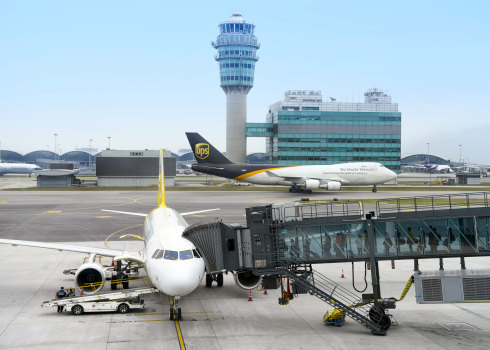
Photo: tsuna72 from Fukuoka, Japan