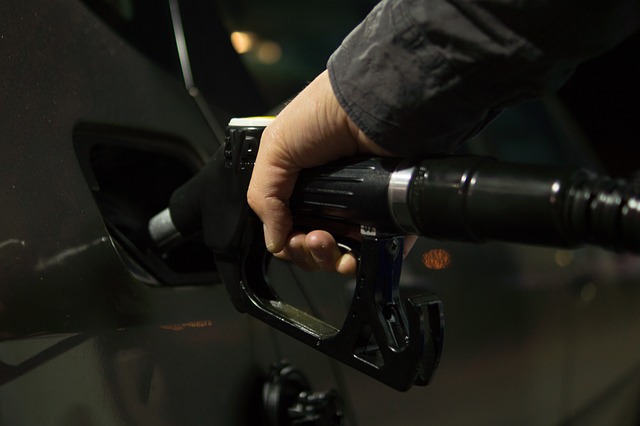
 The Development Budget Coordinating Committee (DBCC) has retracted its recommendation to suspend the second increase in excise tax on fuel under the Tax Reform for Inclusion and Acceleration (TRAIN) law in light of the favorable outlook in the price of oil on the global market.
In a statement, DBCC noted that Dubai crude oil prices have gone down by 14% from an average of US$79 per barrel in October 2018 to $68 per barrel in November. Moreover, forecasts see oil prices declining further to $60 per barrel in 2019, “indicating a downward trend in worldwide oil prices,” DBCC said.
DBCC is composed of the Department of Budget and Management, Department of Finance, National Economic and Development Authority, and Central Bank of the Philippines.
Earlier, economic managers recommended the temporary suspension of the second tranche of the increase in a bid to address rising inflation rate.
DBCC has deemed the suspension already “unnecessary” as inflation is moderating due to supply-side reforms initiated by the Philippine government and falling petroleum prices in the world market.
DBCC said it also considered “the adverse impact on revenues and expenditures for fiscal year 2019 should the government proceed with the suspension.” If the suspension pushes through, DBCC estimates a revenue loss of P43.4 billion for a 12-month period, assuming Dubai crude oil prices average at $65 per barrel in 2019.
The recommendation to continue implementing the increase in fuel excise tax will be further discussed in a Cabinet meeting on December 4, and is subject to the approval of President Rodrigo Duterte.
Budget Secretary Benjamin Diokno said inflation would remain on target despite the implementation of the second phase of oil excise tax hike.
“We had an emergency meeting yesterday (Nov 29) and Central Bank is part of DBCC, and we asked them for their views and they said inflation will still be on target despite the two-peso tax adjustment by next year,” Diokno said.
Domestic shipping lines and foreign and local airlines have started re-implementing a fuel surcharge, while some truckers have increased their rates due to the higher fuel excise tax under TRAIN, under which the first tranche of increase was implemented in January this year. Fuel accounts for a big chunk of operating expenses of shipping lines, airlines, and truckers.
TRAIN raised the excise tax on diesel to P2.50 per liter this year. Starting January 2019, TRAIN was to have added another P2 excise tax per liter to the cost of diesel and gasoline. This would take the total excise tax for diesel to P4.50 and for gasoline to P9.