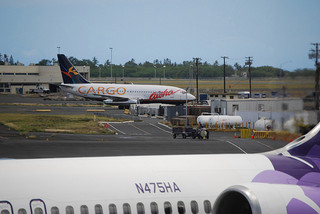
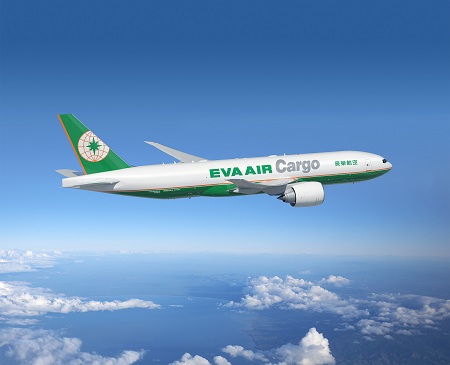
LOCAL airlines and cargo companies welcomed the planned pullout of Federal Express (FedEx) from Subic Freeport in 2008, saying the US express carrier’s operations in the country was in violation of the Constitution.Robert Lim Joseph, president of Save Our Skies (SOS), said local airlines and freight forwarding companies were not surprised when FedEx announced recently that it was closing its Asian hub in Subic and transferring to Guangzhou, China in 2008.
"This only shows that foreign companies would go where the market is. China is a big market for the United States. The company sees more traffic between US and China and other Asian destinations," Joseph said.He said FedEx would only use the Philippines as transit point to other destinations in Southeast Asia when it transfers its operations to China.
Joseph added that the pullout would not have a negative economic impact on the Philippines since FedEx’s investment is insignificant and the company only pays a small amount of taxes with the bulk still paid in the US. "Their operation here did not even result in lower cargo rates," Joseph said. On the contrary, he said, the FedEx pullout would return the business it has taken away from local and foreign carriers and local freight forwarding companies."Cargo destined from the US to the Philippines and vice versa will still be there even without FedEx," he added.
According to Joseph, the decision to allow FedEx to establish a hub in Subic in 1995 was not a "win-win" situation."The Philippine government trumpeted over nothing," he said, referring to its delight when the government got FedEx to set up its hub in Subic over other competing areas. "The government just surrendered its patrimony and went against the Constitution." He said Subic is also not viable as an international airport because of limited space.
"Subic is more suitable as a port because of its deep water. The former Clark Airbase in Pampanga is more suited as an international airport as it has a huge land space," Joseph emphasized.Earlier, the SOS protested the alleged 7th freedom flights of FedEx in violation of the Constitution. Seventh freedom gives a carrier operating entirely outside the territory of the flag state to fly into the territory of the grantor state and there, discharge or take on traffic coming from or destined for a third state or states.
The SOS said the RP-US Air Transport Agreement (ATA) does not allow 7th freedom flights by US cargo carriers.Local freight forwarding companies have also complained that FedEx and foreign express operators United Parcel Service (UPS) and DHL are now engaged in domestic commerce by directly competing with local cargo agents.They claimed that although FedEx, UPS and DHL are known as cargo airlines, they are in fact operating as air freight forwarders competing with local cargo forwarders.