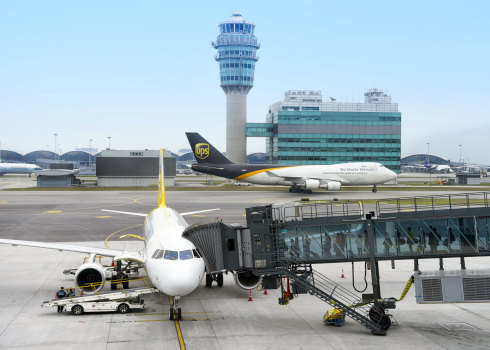
International air cargo demand forged ahead in July, registering another month of solid growth for Asian air carriers, while international air passenger markets showed moderate expansion for the month, according to traffic figures from the Association of Asia Pacific Airlines (AAPA).
Air cargo demand, in freight tonne kilometer terms, recorded a double-digit increase of 10.9% in July, supported by new business orders from developed economies, particularly Europe. The average international freight load factor of 66.0% was 3.8 percentage points higher than the same month last year, after accounting for a 4.4% expansion in offered freight capacity.
Andrew Herdman, AAPA director general, said that from January to July, air cargo markets experienced a firm 10.4% increase in volumes on the back of positive global business conditions.
“Further expansion in manufacturing output and new business orders helped boost air shipment volumes of both intermediate and finished goods,” he added.
Meanwhile, supported by leisure travel demand during the holiday season, the region’s airlines carried a combined total of 27.7 million international passengers in July, representing a 3.4% increase compared to the same month last year.
Continued strength in long-haul travel markets underpinned a 6.2% increase in demand as measured in revenue passenger kilometers. Available seat capacity rose by 6.8%, leading to a marginal 0.5 percentage point decline in the average international passenger load factor to 81.5% for the month.
In the first seven months of the year, regional airlines carried a combined total of 182 million international passengers, 5.3% more than the same period last year. While competition remained intense, international passenger demand continued to be spurred by the availability of affordable airfares and increased network connections.
Looking ahead, Herdman continued, “The overall demand outlook remains positive, with the steady expansion in the global economy supporting both air passenger and air cargo markets. However, given the highly competitive market conditions, Asia Pacific airlines are focusing on carefully managing costs whilst at the same time looking for new revenue opportunities to support future growth and maintain profitability.”
Photo: Aero Icarus from Zürich, Switzerland