 The Investment Coordination Committee-Cabinet Committee (ICC-CabCom) approved on November 6 the change in scope and increase in cost of the North-South Commuter Railway (NSCR) system.
The total cost of the NSCR, a project of the Department of Transportation (DOTr) and Philippine National Railways (PNR), increased to P777.551 billion from P440.881 billion previously. It will be funded through an official development assistance (ODA) loan support from Japan International Cooperation Agency and Asian Development Bank (ADB).
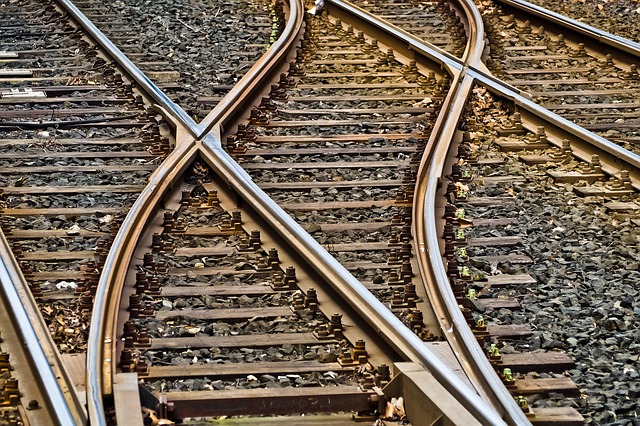
The increase was attributed to three factors as determined by the detailed engineering designs: shift to elevated viaducts instead of at-grade structures to improve operational efficiencies and safety; adoption of standard gauge instead of narrow gauge, in compliance with government standards to ensure seamless operations for all sections; and increase in the number of trains and change from single to double tracks for the Malolos-Clark Railway Project (MCRP).
The higher cost will also cover the resettlement of an estimated 12,900 informal settler families to be affected so as to ensure proper housing and welfare support for them, and to meet ADB and JICA social and environmental safeguards.
The project will bring together the NSCR Phase 1 (Malolos-Tutuban), PNR South Commuter Railway (Solis-Calamba), and MCRP to create a 147-kilometer elevated, double-track, and seamless connection, with 36 stations, from Clark International Airport to Calamba.
The NSCR system will link up with the existing railway lines of the Light Rail Transit (LRT) Line 1, LRT Line 2, and Metro Rail Transit 3, as well as with the upcoming Metro Manila Subway.
According to DOTr, the NSCR, which costs about US$100 million per kilometer, is more cost-effective compared to other railway projects in Asia.
The NSCR system is expected to be partially operational by 2022 with a daily ridership of 340,000 passengers, going up to 550,000 passengers daily when it becomes fully operational by 2023.
The government will subsidize an average of P5 billion per year to cover capital, operating, and renewal costs of the project—an investment that is expected to generate substantial economic activity, create more jobs, increase incomes, and deliver a more comfortable commuting experience.
DOTr has been instructed by the ICC-CabCom to implement measures that will allow the national government to maximize non-farebox revenues, such as incremental taxes from increased property value through revenue-sharing arrangements with local government units and through developing national government properties in the project area.