
 The Bureau of Customs (BOC) said it needs an estimated P6 billion to fully automate its systems and processes, including the replacement of the outdated electronic-to-mobile (e2m) system.
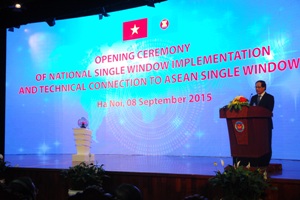
BOC spokesperson Atty. Erastus Sandino Austria, in a recent presentation during a Lower House Committee on Ways and Means hearing, said the planned automation project will have two parts—the Integrated Enhanced Customs Processing System (IECPS) with the National Single Window (NSW) and attendant hardware that needs P3.4 billion, and the enterprise resource planning software with integration to CPS that requires P2.6 billion.
However, Austria said BOC’s computerization program faces two key challenges: funding and legal issues.
Omniprime Marketing, Inc. and Intrasoft International Corp. in 2015 filed a case against BOC officials for halting the bidding for the IECPS and the NSW project. Among the project’s initial five bidders, only the Omniprime and Intrasoft joint venture emerged as the shortlisted eligible consultant.
The Supreme Court in 2016 issued a temporary restraining order against a Manila regional trial court decision preventing the customs bureau and Procurement Service from cancelling the awarding of the project to Omniprime. The SC decision is effective until further orders from the high court.
Austria said BOC has challenged the injunction through the Solicitor General, and is “confident still that we can hurdle this legal predicament and proceed with our modernization plan.”
On the funding issue, Austria said BOC has proposed a budget of P1.5 billion for this year under its 2019 general appropriations to finance the computerization program, but this was reduced to only P250 million. BOC has submitted to Congress a proposal for a supplemental budget.
“We sincerely hope that Congress can help us in this matter,” Austria told lawmakers during the hearing.
He added that BOC also supports the proposal for BOC to appropriate a certain percentage of its annual collection for improving its systems and processes.
“This will ensure that our computer systems, among others, are always maintained and supported,” Austria said.
BOC Management Information System and Technology Group (MISTG) deputy commissioner Jeffrey Ian Dy told PortCalls in a text message that the targeted P1.5 billion in budget for this year will go to the replacement of the e2m and the ERP, starting with the human resource module.
In a press conference on January 24, Dy said that in replacing the e2m, BOC is looking at other options aside from the Philippines Customs and Trade Facilitation Project, a US$150-million loan project proposed by the World Bank.
Less expensive options include financing the project with BOC’s own budget instead of a loan. The e2m replacement, Dy added, should be done this year.
Enhancing its computer system is part of BOC’s 10-point priority program for 2019.
“The vision is a fully automated customs processing system that integrates processes from assessment, inspections (intrusive and non-intrusive), warehousing, transit/transhipment cargo, vessel monitoring, licensing and permits, and even integrates human resources and incentives management,” Customs Commissioner Rey Leonardo Guerrero has said.
BOC said the end goal is a computer system that minimizes the discretion of customs officers so as to reduce opportunities for corruption. The system is also envisioned to enable stakeholders to declare and monitor online their importation and exportation, thus, dramatically improving ease of doing business with the customs bureau, and enhancing the bureau’s law enforcement and anti-smuggling capabilities. – Roumina Pablo