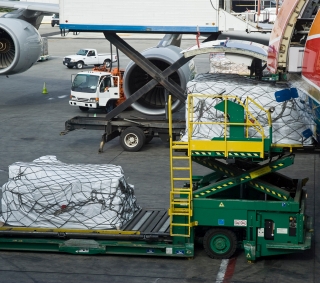
THE Manila International Airport Authority (MIAA) will construct a P15-billion cargo terminal expected to go online by 2015.
Air cargo is currently handled at the Pair-Pags Center adjacent to the Ninoy Aquino International Airport Terminal 1. The center is nearing saturation point.
“We are gearing towards the future,” MIAA assistant general manager Tirso Serrano said at the sidelines of the recent 28th Asean International Airport Association Conference.
“As we anticipate larger traffic in the passage industry, we should also increase capacity of our cargo terminal to handle bigger cargo volume in the future,” Serrano explained.
“We are now closely working with the Department of Trade and Industry (DTI) to carry out the project and we anticipate completing this in less than five years,” he said.
The DTI is revalidating an earlier MIAA proposal for the construction of a new cargo terminal. Potential sites identified by MIAA are an area near NAIA Terminal 1 or just beside NAIA Terminal 3, and a lot between the Manila Domestic Airport and the old Nayong Pilipino.
The terminal may be built under the Build-Operate-Transfer scheme.
Once complete, the cargo terminal is expected to more than double capacity of Pair-Pags Center.
Cargo airlines using NAIA include Air Hong Kong, China Airlines Cargo, DHL Express, FedEx Express, JAL Cargo, Korean Air Cargo, Lufthansa Cargo, NWA Cargo and Transmile Air Services.